Support Kritika | Support H-Net | Buy Books Here | Join the NBN and NBN en Español on Patreon | Visit New Books Network en Español!
- African Studies
- African American Studies
- American Politics
- American Studies
- American South
- American West
- Asian American Studies
- Asian Politics
- Australian and New Zealand Studies
- British Studies
- Canadian Studies
- Caribbean Studies
- Central Asian Studies
- Chinese Studies
- East Asian Studies
- Eastern European Studies
- European Politics
- French Studies
- German Studies
- Iberian Studies
- India Studies
- Indian Ocean World
- Indigenous Studies
- Iranian Studies
- Irish Studies
- Israel Studies
- Italian Studies
- Japanese Studies
- Korean Studies
- Latino Studies
- Latin American Studies
- Mexican Studies
- Middle Eastern Studies
- Pacific Studies
- Polish Studies
- Russian and Eurasian Studies
- Southeast Asian Studies
- South Asian Studies
- Taiwan Studies
- Turkish Studies
- Ukrainian Studies
- Western European Studies
- World Affairs
- Animal Studies
- Anthropology
- Archaeology
- Business, Management, and Marketing
- Media and Communications
- Critical Theory
- Disability Studies
- Drugs, Addiction and Recovery
- Education
- Economics
- Finance
- Geography
- Gender Studies
- Genocide Studies
- Higher Education
- Human Rights
- Journalism
- Language and Translation
- Law
- LGBTQ+ Studies
- National Security
- Philanthropy
- Philosophy
- Policing, Incarceration, and Reform
- Political Science
- Politics & Polemics
- Postcolonial Studies
- Public Policy
- Sex, Sexuality, and Sex Work
- Sociology
- Sound Studies
- Sports
- Urban Studies
- Big Ideas
- Celebration Studies
- Co-Authored
- Cover Story
- Historical Materialism
- History Ex Silo
- Interpretive Political and Social Science
- Invested Investor
- Landscape Architecture
- Mormonism
- NBN Seminar
- New Books with Miranda Melcher
- On the Cusp: Between Strategy and Ethics
- Postscript: Conversations on Politics and Political Science
- Practical History
- Preparing for Life After Grad School
- Psychology and Climate Change
- Syriac Studies
- The Chair: In The Room at the Fed
- Oceanic Studies
- Death in Westminster
- The Last Jury Trial in India















































Nov 23, 2026
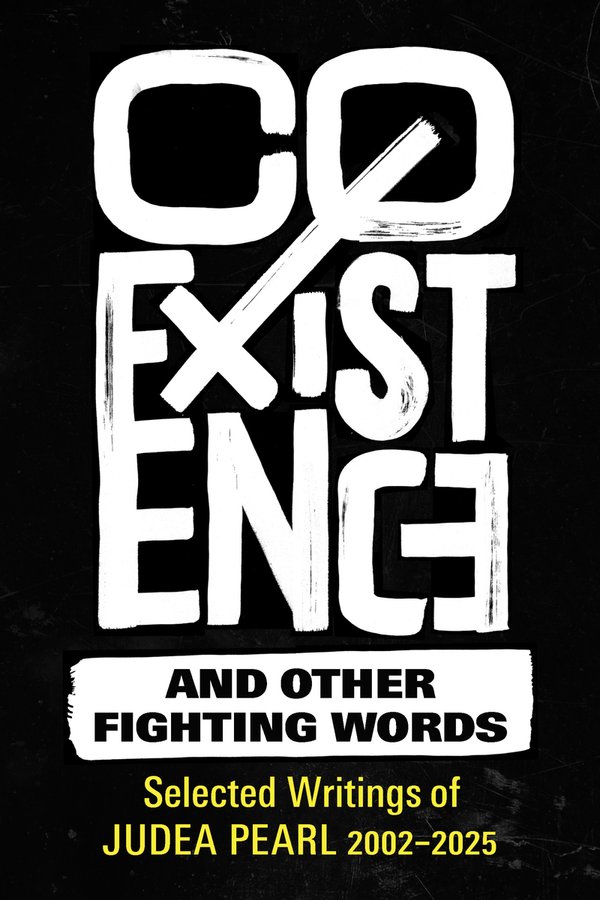
Coexistence and Other Fighting Words
Selected Writings of Judea Pearl, 2002-2025
Summary
What does it truly take to achieve coexistence when the very term itself has become polarized, fraught, and contested?
In this episode of the New Books Network, host Iqbal Akhtar (Florida International University) speaks with Judea Pearl, Turing Award laureate and Professor of Computer Science at the University of California, Los Angeles (UCLA). While internationally recognized as a pioneer in artificial intelligence and causal reasoning, Professor Pearl has also been an enduring voice in Middle Eastern discourse, interfaith engagement, and public advocacy following the tragic 2002 kidnapping and murder of his son, Wall Street Journal reporter Daniel Pearl, in Pakistan.
In this deep, personal, and urgent conversation, Akhtar and Pearl examine Pearl’s recent essay collection, Coexistence and Other Fighting Words. The discussion explores why genuine coexistence remains so challenging to articulate and enact, how grief can be channeled into civic purpose, the volatile climate across Western university campuses, and the prerequisites for a lasting regional peace.
Key Themes Explored in This Episode
1. Why "Coexistence" Is a Fighting Word
While "coexistence" is outwardly a benign, aspirational concept, Pearl explains how the term evokes intense resistance from opposing factions. For many Palestinians, accepting coexistence has historically been framed as conceding permanent Jewish national sovereignty. Conversely, within maximalist or messianic sectors of Israeli society, calls for coexistence are frequently viewed as political compromise or strategic peril. Pearl details his foundational formula for overcoming this deadlock: "Two states for two people, equally legitimate and equally indigenous."
2. The Living Legacy of Daniel Pearl
Professor Pearl reflects tenderly on the ethos of his late son, Daniel. Danny lived with an innate curiosity about people from all walks of life, treating others not as ideological adversaries but as sources of story and kindred humanity. Rather than succumbing to despair or generalized hatred after Danny's murder, the Pearl family founded the Daniel Pearl Foundation. Pearl joined forces with Pakistani-American scholar Ambassador Akbar Ahmed to embark on a landmark global dialogue between Jewish and Muslim communities.
3. Diagnosing "Zionophobia" and the Struggle Over Sovereignty
Drawing from his interfaith tours from London to Doha, Pearl analyzes what he sees as the central ideological barrier preventing peace: an irrational, deep-seated refusal to recognize the permanence and moral legitimacy of Jewish self-determination in the Middle East. Akhtar and Pearl trace how modern anti-Zionism and antisemitism intersect, comparing the historical trajectories of anti-Jewish sentiment across Christian and Islamic theological frameworks.
4. The Crisis on Campus and Norms of Discourse
Addressing the aftermath of October 7 and the widespread encampments across North American universities, Pearl critiques the rhetoric of delegitimization that categorizes Zionist identity as an exclusionary ideology rather than an organic dimension of Jewish ethnic and historical belonging. He advocates for university administrations to establish clear norms of civil discourse that safeguard students against targeted discrimination.
5. Concrete Steps Toward a Viable Future
Moving beyond abstract platitudes, Pearl insists that mutual recognition requires practical policy commitments. This includes addressing the Palestinian refugee issue within the borders of a future Palestinian state rather than within Israel's sovereign borders, ensuring demographic integrity for both self-governing nations. He also touches on the diplomatic paradigm shift catalyzed by the Abraham Accords, finding hope in the resilience of civil society and regional partnerships grounded in shared heritage.
Iqbal Akhtar is the author of the recent book Covenantal Pluralism and writes the Interfaiths Substack.


Comments