Support Kritika | Support H-Net | Buy Books Here | Join the NBN and NBN en Español on Patreon | Visit New Books Network en Español!
- African Studies
- African American Studies
- American Politics
- American Studies
- American South
- American West
- Asian American Studies
- Asian Politics
- Australian and New Zealand Studies
- British Studies
- Canadian Studies
- Caribbean Studies
- Central Asian Studies
- Chinese Studies
- East Asian Studies
- Eastern European Studies
- European Politics
- French Studies
- German Studies
- Iberian Studies
- India Studies
- Indian Ocean World
- Indigenous Studies
- Iranian Studies
- Irish Studies
- Israel Studies
- Italian Studies
- Japanese Studies
- Korean Studies
- Latino Studies
- Latin American Studies
- Mexican Studies
- Middle Eastern Studies
- Pacific Studies
- Polish Studies
- Russian and Eurasian Studies
- Southeast Asian Studies
- South Asian Studies
- Taiwan Studies
- Turkish Studies
- Ukrainian Studies
- Western European Studies
- World Affairs
- Animal Studies
- Anthropology
- Archaeology
- Business, Management, and Marketing
- Media and Communications
- Critical Theory
- Disability Studies
- Drugs, Addiction and Recovery
- Education
- Economics
- Finance
- Geography
- Gender Studies
- Genocide Studies
- Higher Education
- Human Rights
- Journalism
- Language and Translation
- Law
- LGBTQ+ Studies
- National Security
- Philanthropy
- Philosophy
- Policing, Incarceration, and Reform
- Political Science
- Politics & Polemics
- Postcolonial Studies
- Public Policy
- Sex, Sexuality, and Sex Work
- Sociology
- Sound Studies
- Sports
- Urban Studies
- Big Ideas
- Celebration Studies
- Co-Authored
- Cover Story
- Historical Materialism
- History Ex Silo
- Interpretive Political and Social Science
- Invested Investor
- Landscape Architecture
- Mormonism
- NBN Seminar
- New Books with Miranda Melcher
- On the Cusp: Between Strategy and Ethics
- Postscript: Conversations on Politics and Political Science
- Practical History
- Preparing for Life After Grad School
- Psychology and Climate Change
- Syriac Studies
- The Chair: In The Room at the Fed
- Oceanic Studies








































Jul 20, 2026
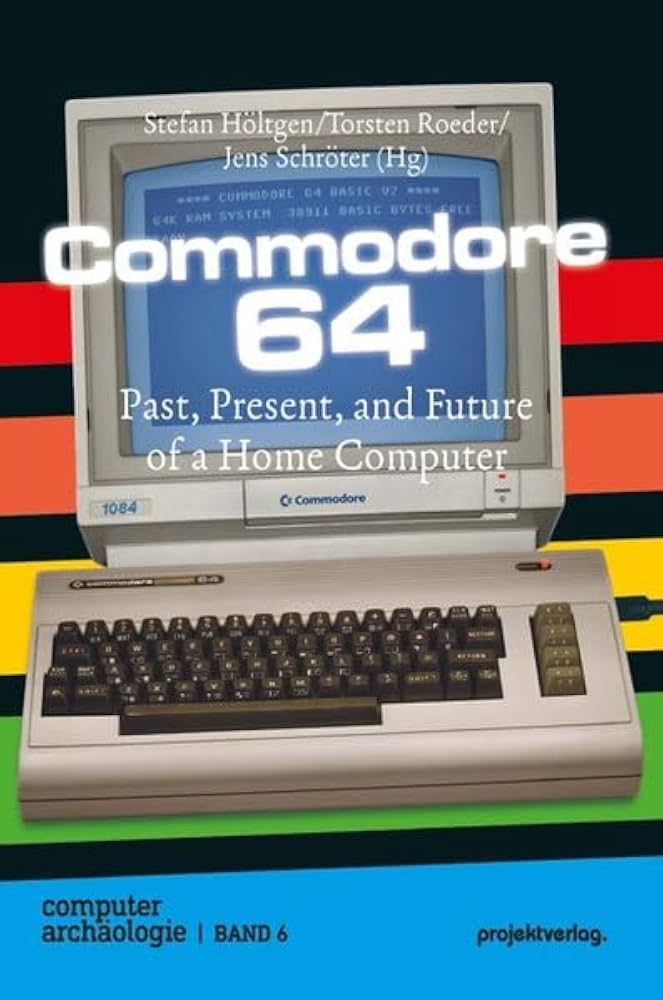
Commodore 64
Past, Present, and Future of a Home Computer
Summary
The Commodore 64 is the most significant computer of its era. From 1982 to 1994, a total of 27 million units were sold—more than any other computer from a single manufacturer afterwards. Due to its widespread use as well as its technical features, the C64 has a huge international following—even to this day. The 19 contributions compiled in Commodore 64: Past, Present, and Future of a Home Computer (Projekt Verlag, 2026) illustrate the significance of the platform for the digitalization of society, the general public’s computer science knowledge, as well as digital art and culture—both in the past, present, and also in the future. Volume 5 of the »Computer Archaeology« series is partly based on the conference of the same name held in 2024 at the University of Bonn and has here been supplemented with additional contributions from the fields of artificial intelligence, quantum computing, and digital humanities.
Rudolf Thomas Inderst (*1978) enjoys video games since 1985. He received a master’s degree in political science, American cultural studies as well as contemporary and recent history from Ludwig-Maximilians-University, Munich and holds two PhDs in game studies (LMU & University of Passau). Currently, he's teaching as a professor for game design and game studies at the HNU University of Applied Sciences Neu-Ulm, Germany, holds the position as lead editor at the online journal TITEL kulturmagazin for the game section, and is editor of the weekly game research newsletter Game Studies Watchlist.
Your Host
Rudolf Thomas Inderst
Rudolf Inderst is a professor of Game Studies & Game Design at the HNU, University of Applied Sciences, Neu-Ulm, Germany.


Comments