Support Kritika | Support H-Net | Buy Books Here | Join the NBN and NBN en Español on Patreon | Visit New Books Network en Español!
- African Studies
- African American Studies
- American Politics
- American Studies
- American South
- American West
- Asian American Studies
- Asian Politics
- Australian and New Zealand Studies
- British Studies
- Canadian Studies
- Caribbean Studies
- Central Asian Studies
- Chinese Studies
- East Asian Studies
- Eastern European Studies
- European Politics
- French Studies
- German Studies
- Iberian Studies
- India Studies
- Indian Ocean World
- Indigenous Studies
- Iranian Studies
- Irish Studies
- Israel Studies
- Italian Studies
- Japanese Studies
- Korean Studies
- Latino Studies
- Latin American Studies
- Mexican Studies
- Middle Eastern Studies
- Pacific Studies
- Polish Studies
- Russian and Eurasian Studies
- Southeast Asian Studies
- South Asian Studies
- Taiwan Studies
- Turkish Studies
- Ukrainian Studies
- Western European Studies
- World Affairs
- Animal Studies
- Anthropology
- Archaeology
- Business, Management, and Marketing
- Media and Communications
- Critical Theory
- Disability Studies
- Drugs, Addiction and Recovery
- Education
- Economics
- Finance
- Geography
- Gender Studies
- Genocide Studies
- Higher Education
- Human Rights
- Journalism
- Language and Translation
- Law
- LGBTQ+ Studies
- National Security
- Philanthropy
- Philosophy
- Policing, Incarceration, and Reform
- Political Science
- Politics & Polemics
- Postcolonial Studies
- Public Policy
- Sex, Sexuality, and Sex Work
- Sociology
- Sound Studies
- Sports
- Urban Studies
- Big Ideas
- Celebration Studies
- Co-Authored
- Cover Story
- Historical Materialism
- History Ex Silo
- Interpretive Political and Social Science
- Invested Investor
- Landscape Architecture
- Mormonism
- NBN Seminar
- New Books with Miranda Melcher
- On the Cusp: Between Strategy and Ethics
- Postscript: Conversations on Politics and Political Science
- Practical History
- Preparing for Life After Grad School
- Psychology and Climate Change
- Syriac Studies
- The Chair: In The Room at the Fed
- Oceanic Studies
- Death in Westminster
- The Last Jury Trial in India







































Nov 16, 2026
Humanities Make Science Education More Meaningful
Summary
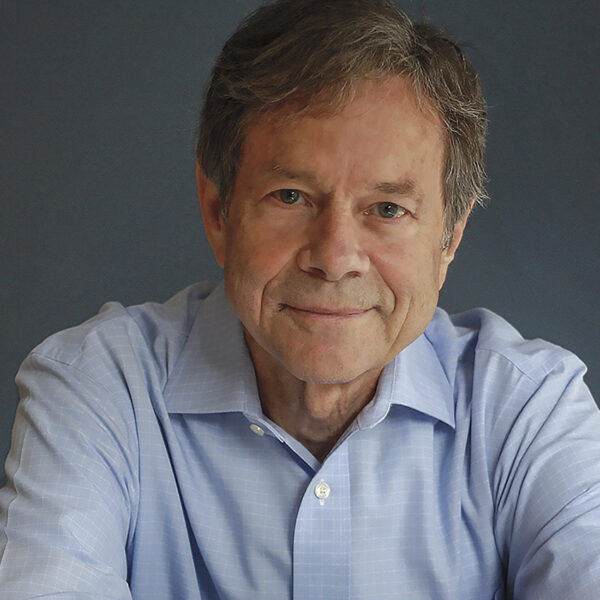
What do science and the humanities have to teach one another? And what do we lose when universities separate these ways of understanding the world? In this episode of Nuevos Horizontes, we welcome Alan Lightman, physicist, novelist, and Professor at the Massachusetts Institute of Technology (MIT), for a conversation about the intersections of scientific inquiry, literature, philosophy, and human experience. In his essay "Integrating Science with the Humanities" in University World News, Lightman makes a compelling case for an education that moves beyond disciplinary boundaries and recognizes the humanities as an essential dimension of scientific knowledge. This episode is part of a series that studies the intersections of science and the humanities in university life. Joining host professor Jeffrey Herlihy-Mera of the Universidad de Puerto Rico-Mayagüez (UPR-M) are co-hosts Amelia Merced, biologist at the UPR-M, and Matias Cafaro, Associate Dean of Research and Creative Activity at UPR-M. Together, they explore how historical, philosophical, artistic, and ethical perspectives can enrich scientific thinking; why interdisciplinary education matters; and how the humanities can help us confront the profound questions raised by artificial intelligence and emerging technologies. The Instituto Nuevos Horizontes is housed at the Universidad de Puerto Rico-Mayagüez. Link Here
Topics in this conversation:
- Why science needs the humanities to understand its significance.
- Why scientific curiosity, observation, and the capacity to ask questions must remain human activities.
- Why universities must protect and cultivate human experience in an increasingly digitized world.
Quotes
- “[Scientists] need a vocabulary and we need pictures and metaphors to help us understand these things, and the arts help us do that.” -Alan Lightman
- “When science is taught exclusively as an accumulation of established facts and formulas, students fail to recognize it as an evolving process of questions and interpretation and also discovery.” -Jeffrey Herlihy-Mera
- “[The humanities and sciences] connect, but the connection is not always visible.” -Matías Cafaro
- “Learning is an emotional experience.” -Amelia Merced
- “The sea of digitization … reaches beyond science and right into the very building blocks of human experience, language, interaction.” -Jeffrey Herlihy-Mera
- “AI being the Chernobyl for the human mind or the human experience.” -Jeffrey Herlihy-Mera
- “Artists usually have a great appreciation for details and details that scientists do not necessarily pay attention to; things that we ignore or things that are not significant or they're not statistically significant.” -Amelia Merced
- “We humans ask the questions and that is something that may remain in our province.” -Alan Lightman
- “We want a student and citizen that is well-rounded and can understand the whole, and not just bits and pieces.” -Matías Cafaro
- “The important issues of today involve many different disciplines, and the disciplines have to be able to talk to each other.” -Alan Lightman


Comments