Support Kritika | Support H-Net | Buy Books Here | Join the NBN and NBN en Español on Patreon | Visit New Books Network en Español!
- African Studies
- African American Studies
- American Politics
- American Studies
- American South
- American West
- Asian American Studies
- Asian Politics
- Australian and New Zealand Studies
- British Studies
- Canadian Studies
- Caribbean Studies
- Central Asian Studies
- Chinese Studies
- East Asian Studies
- Eastern European Studies
- European Politics
- French Studies
- German Studies
- Iberian Studies
- India Studies
- Indian Ocean World
- Indigenous Studies
- Iranian Studies
- Irish Studies
- Israel Studies
- Italian Studies
- Japanese Studies
- Korean Studies
- Latino Studies
- Latin American Studies
- Mexican Studies
- Middle Eastern Studies
- Pacific Studies
- Polish Studies
- Russian and Eurasian Studies
- Southeast Asian Studies
- South Asian Studies
- Taiwan Studies
- Turkish Studies
- Ukrainian Studies
- Western European Studies
- World Affairs
- Animal Studies
- Anthropology
- Archaeology
- Business, Management, and Marketing
- Media and Communications
- Critical Theory
- Disability Studies
- Drugs, Addiction and Recovery
- Education
- Economics
- Finance
- Geography
- Gender Studies
- Genocide Studies
- Higher Education
- Human Rights
- Journalism
- Language and Translation
- Law
- LGBTQ+ Studies
- National Security
- Philanthropy
- Philosophy
- Policing, Incarceration, and Reform
- Political Science
- Politics & Polemics
- Postcolonial Studies
- Public Policy
- Sex, Sexuality, and Sex Work
- Sociology
- Sound Studies
- Sports
- Urban Studies
- Big Ideas
- Celebration Studies
- Co-Authored
- Cover Story
- Historical Materialism
- History Ex Silo
- Interpretive Political and Social Science
- Invested Investor
- Landscape Architecture
- Mormonism
- NBN Seminar
- New Books with Miranda Melcher
- On the Cusp: Between Strategy and Ethics
- Postscript: Conversations on Politics and Political Science
- Practical History
- Preparing for Life After Grad School
- Psychology and Climate Change
- Syriac Studies
- The Chair: In The Room at the Fed
- Oceanic Studies




































Jun 23, 2026
Infrastructure, Nickel, and the Politics of Polyalignment in Indonesia
Summary
Indonesia is often framed as a key arena of China-Japan-US competition in the Second Cold War. In this episode, we talk with Trissia Wijaya about her book on the political economy of Chinese and Japanese infrastructure financing in Indonesia. She challenges the view that it is simply an instrument of competition and instead situates infrastructure finance within Indonesia’s own development strategies. She shows how development assistance, commercial loans, export credits, and public-private partnerships are shaped by contestation among Chinese and Japanese capital, as well as Indonesian civil society, state actors, and labor. We also link these dynamics to the country’s changing industrial policy, from energy infrastructure to Nickel processing to the planned capital of Nusantara, asking how Indonesia uses strategies of polyalignment and foreign finance to pursue its own developmental ambitions.
—
Trissia Wijaya is a McKenzie Research Fellow at the Asia Institute at the University of Melbourne. Prior to this role, she worked as a Senior Research Fellow at Asia-Japan Research Organization, Ritsumeikan University, and taught at the College of Global Liberal Arts. She received her PhD in Politics from Murdoch University, Australia, and remains affiliated as an Honorary Research Fellow at the Indo-Pacific Research Centre there. She has also worked at the Asian Development Bank and UNDP Indonesia, cultivating an interest in the political economy of development and evidence-informed policymaking. Her research spans green infrastructure financing, industrial policy, and critical mineral development. She has conducted intensive fieldwork across Indonesia, Japan, and China.
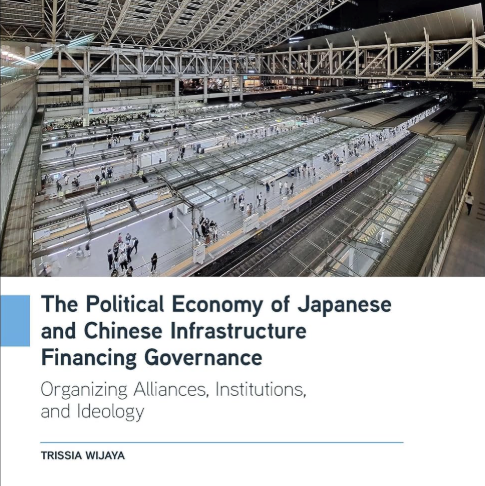
The Political Economy of Japanese and Chinese Infrastructure Financing Governance: Organizing Alliances, Institutions, and Ideology (Bristol University Press 2025)
Indonesia, nickel, and the political economy of polyalignment in the Second Cold War in Third World Quarterly
An EV-fix for Indonesia: the green development-resource nationalist nexus in Environmental Policy
Your Host
Second Cold War Observatory
This podcast is produced by Jessica DiCarlo and Seth Schindler through The Second Cold War Observatory, a collective of scholars committed to advancing historically and contextually situated understandings of contemporary great power rivalry.


Comments