Support Kritika | Support H-Net | Buy Books Here | Join the NBN and NBN en Español on Patreon | Visit New Books Network en Español!
- African Studies
- African American Studies
- American Politics
- American Studies
- American South
- American West
- Asian American Studies
- Asian Politics
- Australian and New Zealand Studies
- British Studies
- Canadian Studies
- Caribbean Studies
- Central Asian Studies
- Chinese Studies
- East Asian Studies
- Eastern European Studies
- European Politics
- French Studies
- German Studies
- Iberian Studies
- India Studies
- Indian Ocean World
- Indigenous Studies
- Iranian Studies
- Irish Studies
- Israel Studies
- Italian Studies
- Japanese Studies
- Korean Studies
- Latino Studies
- Latin American Studies
- Mexican Studies
- Middle Eastern Studies
- Pacific Studies
- Polish Studies
- Russian and Eurasian Studies
- Southeast Asian Studies
- South Asian Studies
- Taiwan Studies
- Turkish Studies
- Ukrainian Studies
- Western European Studies
- World Affairs
- Animal Studies
- Anthropology
- Archaeology
- Business, Management, and Marketing
- Media and Communications
- Critical Theory
- Disability Studies
- Drugs, Addiction and Recovery
- Education
- Economics
- Finance
- Geography
- Gender Studies
- Genocide Studies
- Higher Education
- Human Rights
- Journalism
- Language and Translation
- Law
- LGBTQ+ Studies
- National Security
- Philanthropy
- Philosophy
- Policing, Incarceration, and Reform
- Political Science
- Politics & Polemics
- Postcolonial Studies
- Public Policy
- Sex, Sexuality, and Sex Work
- Sociology
- Sound Studies
- Sports
- Urban Studies
- Big Ideas
- Celebration Studies
- Co-Authored
- Cover Story
- Historical Materialism
- History Ex Silo
- Interpretive Political and Social Science
- Invested Investor
- Landscape Architecture
- Mormonism
- NBN Seminar
- New Books with Miranda Melcher
- On the Cusp: Between Strategy and Ethics
- Postscript: Conversations on Politics and Political Science
- Practical History
- Preparing for Life After Grad School
- Psychology and Climate Change
- Syriac Studies
- The Chair: In The Room at the Fed
- Oceanic Studies










































May 11, 2026
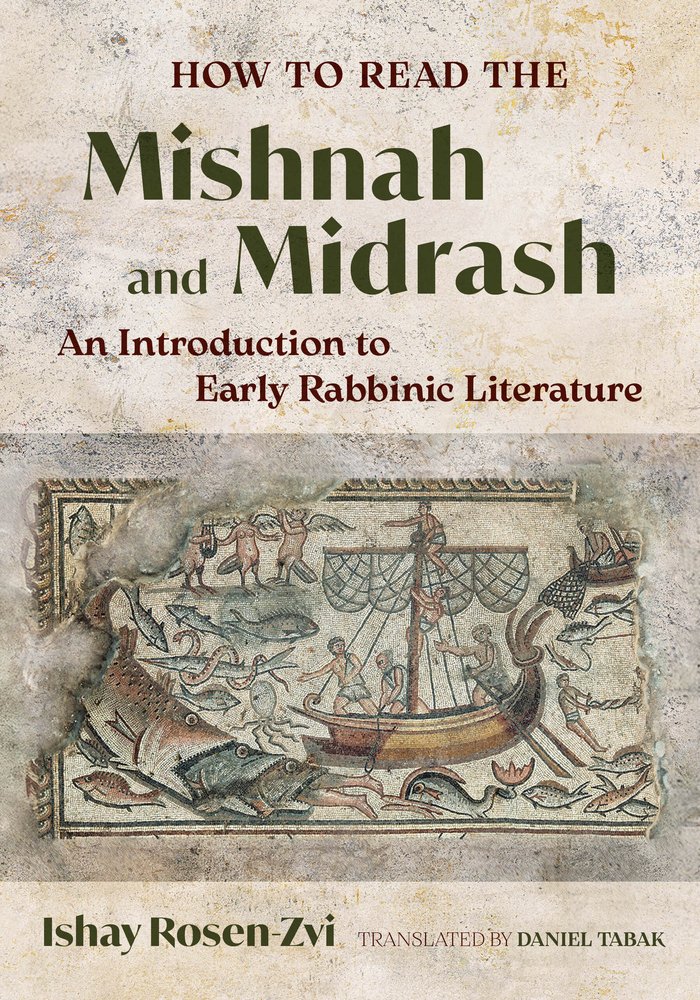
How to Read Mishnah and Midrash
An Introduction to Early Rabbinic Literature
Summary
The early rabbinic period produced two major literary formations—the Mishnah and Midrash—which have since remained central pillars of Jewish textual tradition. How to Read the Mishnah and Midrash: An Introduction to Early Rabbinic Literature (U California Press, 2026) is the first comprehensive introduction to these two foundational works of Jewish thought in English.
In many ways, all subsequent rabbinic literature emerged from the framework established by these two genres. The Mishnah presented a comprehensive legal system independent of the Bible, encompassing a remarkably broad spectrum of legal topics—from ritual law to civil disputes, capital legislation, marital status, and beyond—woven into a coherent and autonomous legal corpus. The Midrash is the first comprehensive running commentary of the Pentateuch, marked by its interpretive freedom and creative playfulness.
This hands-on companion provides an intimate understanding of how the two texts function and essential tools for engaging with them in depth. With translations, close readings, and analyses of hundreds of primary source materials, this book offers readers a deeper appreciation of the structure, methodology, and enduring impact of the Mishnah and Midrash.
New Books in Late Antiquity is presented by Ancient Jew Review
Ishay Rosen-Zvi teaches rabbinic literature at the Department of Jewish philosophy and Talmud at Tal-Aviv University. His previous books include: Goy: Israel’s Multiple Others and the Birth of the Gentile, written with Adi Ophir; The Mishnaic Sotah Ritual; and Demonic Desires: “Yetzer Hara and the Problem of Evil in Late Antiquity.”
Michael Motia teaches Classics and Religious Studies at UMass Boston
Your Host
Michael Motia
Michael Motia teaches in Religious Studies and Classics at UMass Boston.


Comments