Support Kritika | Support H-Net | Buy Books Here | Join the NBN and NBN en Español on Patreon | Visit New Books Network en Español!
- African Studies
- African American Studies
- American Politics
- American Studies
- American South
- American West
- Asian American Studies
- Asian Politics
- Australian and New Zealand Studies
- British Studies
- Canadian Studies
- Caribbean Studies
- Central Asian Studies
- Chinese Studies
- East Asian Studies
- Eastern European Studies
- European Politics
- French Studies
- German Studies
- Iberian Studies
- India Studies
- Indian Ocean World
- Indigenous Studies
- Iranian Studies
- Irish Studies
- Israel Studies
- Italian Studies
- Japanese Studies
- Korean Studies
- Latino Studies
- Latin American Studies
- Mexican Studies
- Middle Eastern Studies
- Pacific Studies
- Polish Studies
- Russian and Eurasian Studies
- Southeast Asian Studies
- South Asian Studies
- Taiwan Studies
- Turkish Studies
- Ukrainian Studies
- Western European Studies
- World Affairs
- Animal Studies
- Anthropology
- Archaeology
- Business, Management, and Marketing
- Media and Communications
- Critical Theory
- Disability Studies
- Drugs, Addiction and Recovery
- Education
- Economics
- Finance
- Geography
- Gender Studies
- Genocide Studies
- Higher Education
- Human Rights
- Journalism
- Language and Translation
- Law
- LGBTQ+ Studies
- National Security
- Philanthropy
- Philosophy
- Policing, Incarceration, and Reform
- Political Science
- Politics & Polemics
- Postcolonial Studies
- Public Policy
- Sex, Sexuality, and Sex Work
- Sociology
- Sound Studies
- Sports
- Urban Studies
- Big Ideas
- Celebration Studies
- Co-Authored
- Cover Story
- Historical Materialism
- History Ex Silo
- Interpretive Political and Social Science
- Invested Investor
- Landscape Architecture
- Mormonism
- NBN Seminar
- New Books with Miranda Melcher
- On the Cusp: Between Strategy and Ethics
- Postscript: Conversations on Politics and Political Science
- Practical History
- Preparing for Life After Grad School
- Psychology and Climate Change
- Syriac Studies
- The Chair: In The Room at the Fed
- Oceanic Studies














































Feb 26, 2026
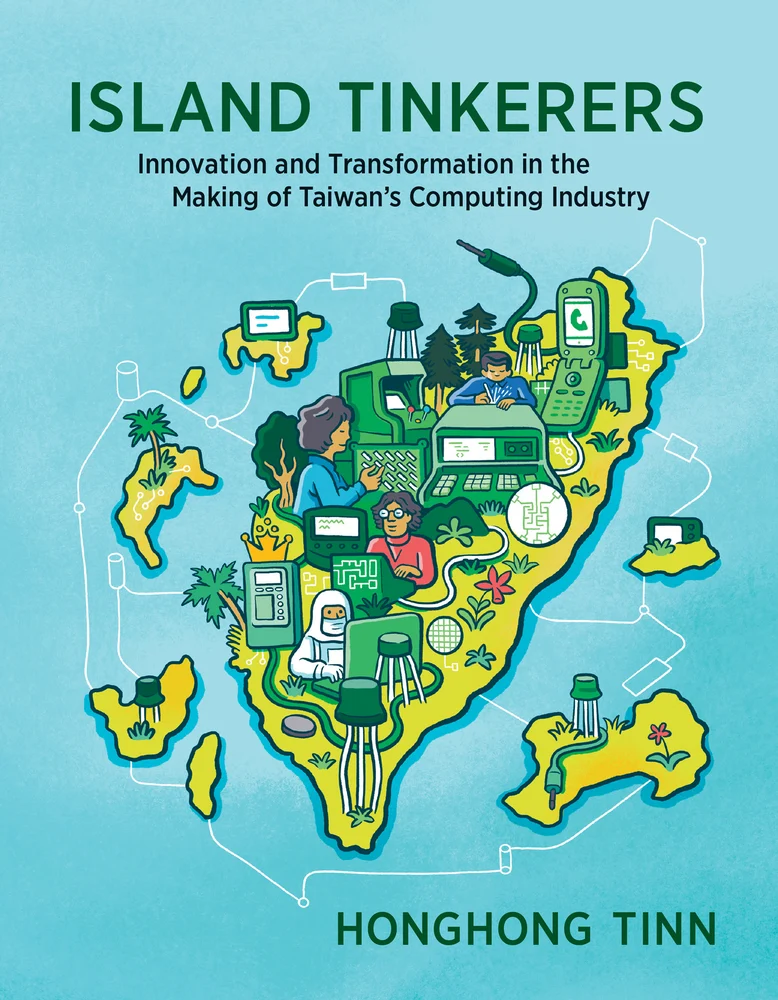
Island Tinkerers
Innovation and Transformation in the Making of Taiwan's Computing Industry
Summary
How Taiwan rose to global prominence in high tech manufacturing, from computer maker to the world's leading chip manufacturer. How did Taiwan, a former Japanese colony and the last fortress of the defeated Chinese Nationalists, ascend to such heights in high-tech manufacturing? In Island Tinkerers: Innovation and Transformation in the Making of Taiwan's Computing Industry (MIT Press, 2025), Honghong Tinn tells the critical history of how hobbyists and enthusiasts in Taiwan, including engineers, technologists, technocrats, computer users, and engineers-turned-entrepreneurs, helped transform the country with their hands-on engagement with computers. Rather than engaging in wholesale imitation of US sources, she explains, these technologists tinkered with imported computing technology and experimented with manufacturing their own versions, resulting in their own brand of successful innovation.
Defying the stereotype of “the West innovates, and the East imitates,” Tinn tells the story of Taiwanese technologists' efforts over the past six decades. Beginning in the 1960s, they grappled with the “black-boxed” computers that were newly available through international technical-aid programs. Shortly after, multinational corporations that outsourced transistor and integrated circuit assembly overseas began employing Taiwanese engineers and factory workers. Island tinkerers developed strategies to adapt, modify, assemble, and work with computers in an inventive manner. It was through this creative and ingenious tinkering with computers that they were able to gain a better understanding of the technology, opening the door to future manufacturing endeavors that now include Acer, Foxconn, Asus, and Taiwan Semiconductor Manufacturing Company (TSMC).
Honghong Tinn is Assistant Professor in the Program in the History of Science, Technology, and Medicine and the Department of Electrical and Computer Engineering at the University of Minnesota, Twin Cities.
Li-Ping Chen is a visiting scholar in the Department of East Asian Languages and Cultures at the University of Southern California. Her research interests include literary translingualism, diaspora, and nativism in Sinophone, inter-Asian, and transpacific contexts. Li-Ping’s NBN episodes on Taiwan Studies are supported by the Chun and Jane Chiu Family Foundation Taiwan Studies Program at Oregon State University.
Relevant Links:
Your Host
Li-Ping Chen
Li-Ping Chen is a visiting scholar in Department of East Asian Languages and Cultures at the University of Southern California. Her research interests include literary translingualism, diaspora, and nativism in Sinophone, inter-Asian, and transpacific contexts.


Comments