Support Kritika | Support H-Net | Buy Books Here | Join the NBN and NBN en Español on Patreon | Visit New Books Network en Español!
- African Studies
- African American Studies
- American Politics
- American Studies
- American South
- American West
- Asian American Studies
- Asian Politics
- Australian and New Zealand Studies
- British Studies
- Canadian Studies
- Caribbean Studies
- Central Asian Studies
- Chinese Studies
- East Asian Studies
- Eastern European Studies
- European Politics
- French Studies
- German Studies
- Iberian Studies
- India Studies
- Indian Ocean World
- Indigenous Studies
- Iranian Studies
- Irish Studies
- Israel Studies
- Italian Studies
- Japanese Studies
- Korean Studies
- Latino Studies
- Latin American Studies
- Mexican Studies
- Middle Eastern Studies
- Pacific Studies
- Polish Studies
- Russian and Eurasian Studies
- Southeast Asian Studies
- South Asian Studies
- Taiwan Studies
- Turkish Studies
- Ukrainian Studies
- Western European Studies
- World Affairs
- Animal Studies
- Anthropology
- Archaeology
- Business, Management, and Marketing
- Media and Communications
- Critical Theory
- Disability Studies
- Drugs, Addiction and Recovery
- Education
- Economics
- Finance
- Geography
- Gender Studies
- Genocide Studies
- Higher Education
- Human Rights
- Journalism
- Language and Translation
- Law
- LGBTQ+ Studies
- National Security
- Philanthropy
- Philosophy
- Policing, Incarceration, and Reform
- Political Science
- Politics & Polemics
- Postcolonial Studies
- Public Policy
- Sex, Sexuality, and Sex Work
- Sociology
- Sound Studies
- Sports
- Urban Studies
- Big Ideas
- Celebration Studies
- Co-Authored
- Cover Story
- Historical Materialism
- History Ex Silo
- Interpretive Political and Social Science
- Invested Investor
- Landscape Architecture
- Mormonism
- NBN Seminar
- New Books with Miranda Melcher
- On the Cusp: Between Strategy and Ethics
- Postscript: Conversations on Politics and Political Science
- Practical History
- Preparing for Life After Grad School
- Psychology and Climate Change
- Syriac Studies
- The Chair: In The Room at the Fed
- Oceanic Studies






































Apr 8, 2026
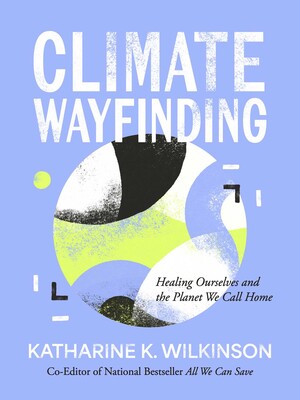
Climate Wayfinding
Healing Ourselves and the Planet We Call Home
Summary
When maps come up short and the path ahead is uncertain, how do we find our way? Visionary climate leader Katharine K. Wilkinson offers a compassionate and empowering guide to navigating from ache to action, doubt to possibility.
Through transformational programs and books, including the national bestseller All We Can Save, Wilkinson has inspired hundreds of thousands of climate journeys. In Climate Wayfinding: Healing Ourselves and the Planet We Call Home (Amber Lotus, 2026) she shares a proven process for looking inward with care, outward with curiosity, and forward with courage. Ultimately, readers chart a course toward playing their unique part in our collective healing.
With her singular blend of warmth and rigor, Wilkinson lights the way through stirring personal essays, interwoven with the wisdom of other climate leaders and the beauty of poetry, art, and song. A book to sit with and savor, Climate Wayfinding also invites engagement with journaling prompts, practical exercises, and guides for conversation.
Whether steeped in climate or newly curious, readers will discover something grounding and generative in these pages. The terrain ahead is calling—and we have everything we need to find our way. (Source: here)
Dr. Katharine Wilkinson is a climate leader named by Time magazine as one of 15 “women who will save the world.” Her publications include the New York Times bestseller, Project Drawdown, and the co-edited, All We Can Save, which is an anthology of writings on climate change named among the 10 best science books of 2020 by Smithsonian magazine. Dr. Wilkinson is the co-founder and executive director of the All We Can Save Project and Co-host of the podcast, A Matter of Degrees.
In this interview with Dr. Patricia Houser, Dr. Katharine Wilkinson discusses the unique organization of the Climate Wayfinding book--with its strategic juxtaposition of inspirational essays, poetry, music and reflective passages. This “quilt of components” says Wilkinson, was honed in a series of workshops designed to help people find meaningful and impactful roles as climate leaders/workers.
Selected subtopics and excerpts of the conversation can be found at the following timestamps:
0:04 mins. The podcast opens with the author explaining that people today are confronting a world where the earth’s features no longer resembles what is on a map—we are literally “map-less.” [Background instrumental music: folk_acoustic from Pixabay]
3:04 “Most books talk to you. These pages hope to walk with you.”
4:18 The Author explains, when she is asked “What can I do?” about the climate crisis, she feels that the answer is really, “something of a Russian doll:”
Wilkinson: We ask, what can I do? But sitting within that question are often other bigger wonderings about what it means to be alive at this time, what it means to contribute, where we belong, how are we going to cope?
5:12 Wilkinson: This is an unusual book in the sense that it grew out of this experiential learning and leadership development program and then found its way onto the page.
6:41 Explaining who the book is written for and who is it designed to help
10:41 How the reflective passages and invitations to meditate in this book help people prepare for climate work
15:08 The power of community building as part of a preparation for climate work, has its parallels in history.
17:15 The challenge of better engaging the 89% of people around the world who would like to see more climate action.
24:40 The website climatewayfinding.earth offers audio versions of specially designed meditations printed in the book.
26:45 Features of the website linked to the book.
30:00 Wilkinson: What I hope is that readers, that reading groups, that people who come through the program, they feel at the end of it more equipped for the ongoing work of orientation and navigation and finding our next steps.
Related Topics
Your Host
Patricia Houser
Patricia Houser PhD, AICP is a former professor of geography and urban planning. Based in coastal Connecticut, she now writes and conducts public outreach on environmental issues.
Comments