Support Kritika | Support H-Net | Buy Books Here | Join the NBN and NBN en Español on Patreon | Visit New Books Network en Español!
- African Studies
- African American Studies
- American Politics
- American Studies
- American South
- American West
- Asian American Studies
- Asian Politics
- Australian and New Zealand Studies
- British Studies
- Canadian Studies
- Caribbean Studies
- Central Asian Studies
- Chinese Studies
- East Asian Studies
- Eastern European Studies
- European Politics
- French Studies
- German Studies
- Iberian Studies
- India Studies
- Indian Ocean World
- Indigenous Studies
- Iranian Studies
- Irish Studies
- Israel Studies
- Italian Studies
- Japanese Studies
- Korean Studies
- Latino Studies
- Latin American Studies
- Mexican Studies
- Middle Eastern Studies
- Pacific Studies
- Polish Studies
- Russian and Eurasian Studies
- Southeast Asian Studies
- South Asian Studies
- Taiwan Studies
- Turkish Studies
- Ukrainian Studies
- Western European Studies
- World Affairs
- Animal Studies
- Anthropology
- Archaeology
- Business, Management, and Marketing
- Media and Communications
- Critical Theory
- Disability Studies
- Drugs, Addiction and Recovery
- Education
- Economics
- Finance
- Geography
- Gender Studies
- Genocide Studies
- Higher Education
- Human Rights
- Journalism
- Language and Translation
- Law
- LGBTQ+ Studies
- National Security
- Philanthropy
- Philosophy
- Policing, Incarceration, and Reform
- Political Science
- Politics & Polemics
- Postcolonial Studies
- Public Policy
- Sex, Sexuality, and Sex Work
- Sociology
- Sound Studies
- Sports
- Urban Studies
- Big Ideas
- Celebration Studies
- Co-Authored
- Cover Story
- Historical Materialism
- History Ex Silo
- Interpretive Political and Social Science
- Invested Investor
- Landscape Architecture
- Mormonism
- NBN Seminar
- New Books with Miranda Melcher
- On the Cusp: Between Strategy and Ethics
- Postscript: Conversations on Politics and Political Science
- Practical History
- Preparing for Life After Grad School
- Psychology and Climate Change
- Syriac Studies
- The Chair: In The Room at the Fed
- Oceanic Studies












































Apr 11, 2026
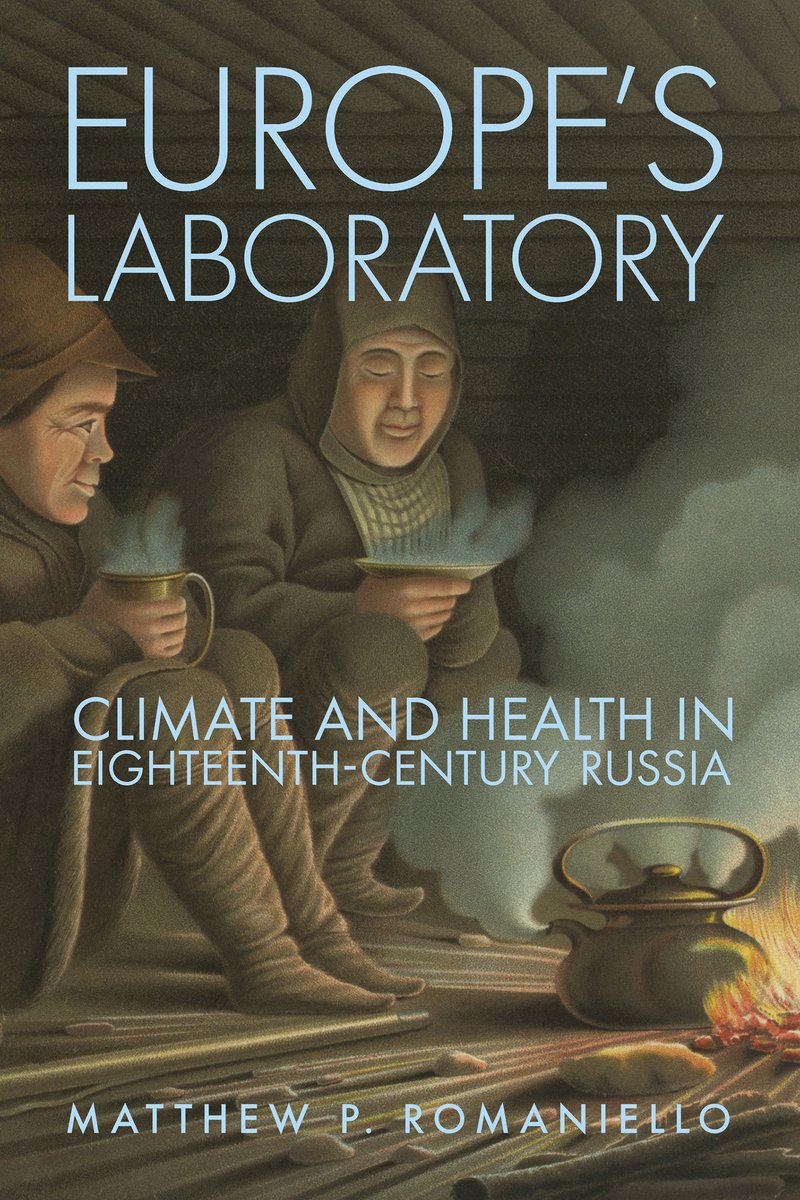
Europe's Laboratory
Climate and Health in Eighteenth-Century Russia
Summary
Europe's Laboratory: Climate and Health in Eighteenth-Century Russia (Cornell UP, 2025) is a history of eighteenth-century naturalists and physicians who were involved in the creation of a classification system for the people of the Russian Empire. These Enlightened scholars traveled through Russia describing its people, landscape, and customs. In an era when climate was seen as a significant factor affecting health and bodies, these men wondered: How did the Russians, a "cold" people—phlegmatic or melancholic, according to humoral theory—manage an empire?
The experiences and observations of doctors and scholars working within the Russian Empire contributed to advances in understanding and/or treating diseases like scurvy, smallpox, and more. Key insights were embedded in the travel writings and correspondences of colorful eighteenth-century figures who Romaniello brings to life with vibrant biographies. Medical knowledge was entangled with stories of culture and imperial politics as well. In Europe's Laboratory, Romaniello’s deft contextualization helps make sense of these intextricable branches of eighteenth-century taxonomies as he demonstrates that the Russian Empire was a part of global knowledge networks.
Related Topics
Your Host
Erika Monahan
Erika Monahan is the author of The Merchants of Siberia: Trade in Early Modern Eurasia (Cornell UP, 2016) and a 2023-2024 Alexander von Humboldt Fellow


Comments