Support Kritika | Support H-Net | Buy Books Here | Join the NBN and NBN en Español on Patreon | Visit New Books Network en Español!
- African Studies
- African American Studies
- American Politics
- American Studies
- American South
- American West
- Asian American Studies
- Asian Politics
- Australian and New Zealand Studies
- British Studies
- Canadian Studies
- Caribbean Studies
- Central Asian Studies
- Chinese Studies
- East Asian Studies
- Eastern European Studies
- European Politics
- French Studies
- German Studies
- Iberian Studies
- India Studies
- Indian Ocean World
- Indigenous Studies
- Iranian Studies
- Irish Studies
- Israel Studies
- Italian Studies
- Japanese Studies
- Korean Studies
- Latino Studies
- Latin American Studies
- Mexican Studies
- Middle Eastern Studies
- Pacific Studies
- Polish Studies
- Russian and Eurasian Studies
- Southeast Asian Studies
- South Asian Studies
- Taiwan Studies
- Turkish Studies
- Ukrainian Studies
- Western European Studies
- World Affairs
- Animal Studies
- Anthropology
- Archaeology
- Business, Management, and Marketing
- Media and Communications
- Critical Theory
- Disability Studies
- Drugs, Addiction and Recovery
- Education
- Economics
- Finance
- Geography
- Gender Studies
- Genocide Studies
- Higher Education
- Human Rights
- Journalism
- Language and Translation
- Law
- LGBTQ+ Studies
- National Security
- Philanthropy
- Philosophy
- Policing, Incarceration, and Reform
- Political Science
- Politics & Polemics
- Postcolonial Studies
- Public Policy
- Sex, Sexuality, and Sex Work
- Sociology
- Sound Studies
- Sports
- Urban Studies
- Big Ideas
- Celebration Studies
- Co-Authored
- Cover Story
- Historical Materialism
- History Ex Silo
- Interpretive Political and Social Science
- Invested Investor
- Landscape Architecture
- Mormonism
- NBN Seminar
- New Books with Miranda Melcher
- On the Cusp: Between Strategy and Ethics
- Postscript: Conversations on Politics and Political Science
- Practical History
- Preparing for Life After Grad School
- Psychology and Climate Change
- Syriac Studies
- The Chair: In The Room at the Fed
- Oceanic Studies








































Jul 6, 2026
Meditation Sickness and the Dangers of Buddhist Practice with Pierce Salguero
Summary
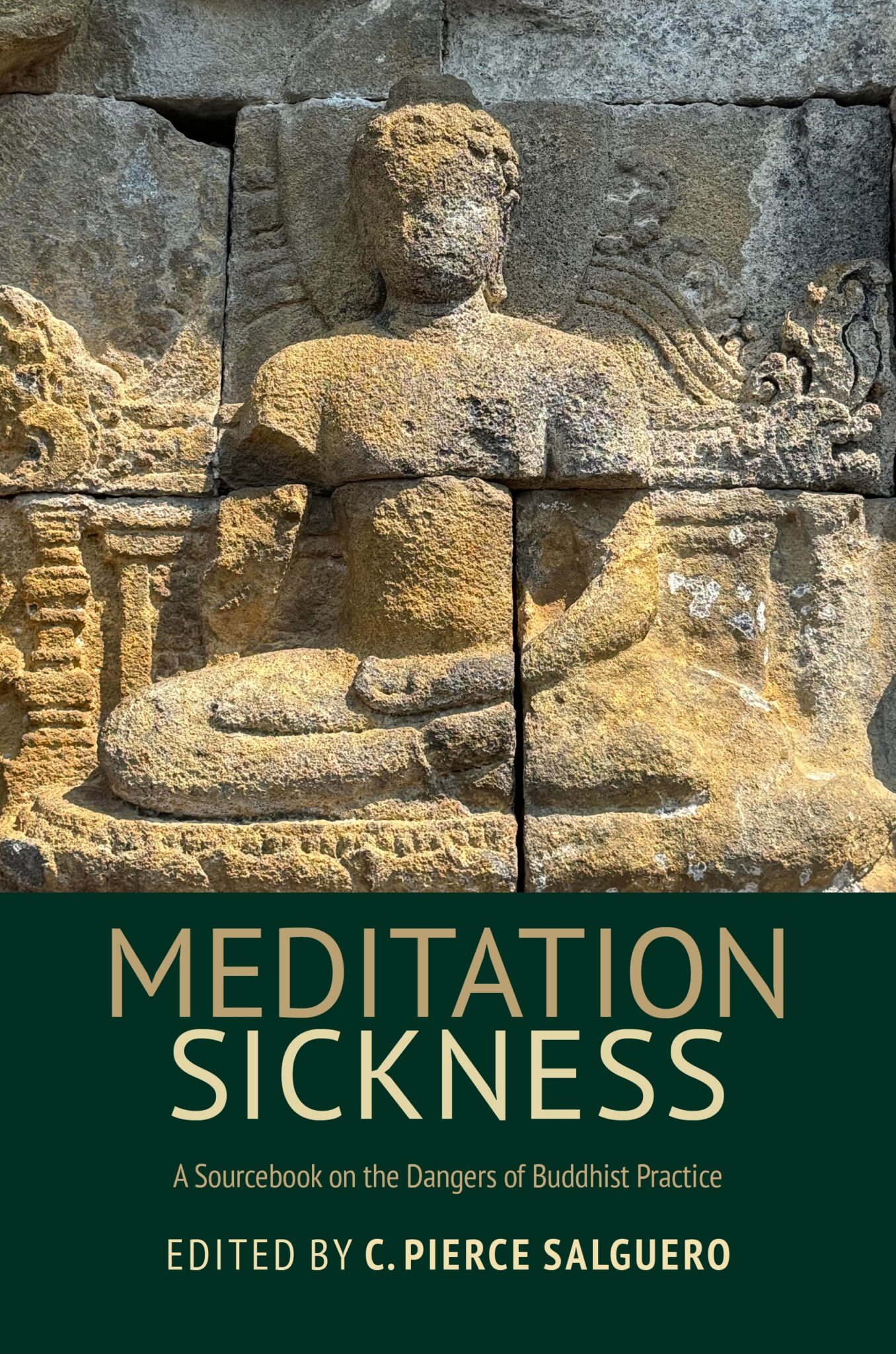
Pierce Salguero joins us to discuss his new co-edited volume, Meditation Sickness: A Sourcebook on the Dangers of Buddhist Practice. While modern mindfulness frames meditation purely as a wellness tool, the Buddhist tradition has long recognized its inherent psychological and physical risks. We explore multi-tradition historical texts, the anatomy of practice crises, and the ethical responsibility of teachers and app developers to provide something along the lines of informed consent.
Key Discussion Points & Timeline
- Contrasting modern wellness marketing with historical accounts of meditative danger; the book provides a sourcebook for Dharma teachers, clinicians, and serious practitioners.
- Multi-Tradition Mapping throughout covers Pali, medieval Chinese, Japanese, and Tibetan sources, many of which we touch on.
- Traditional sources diagnose destabilization and even offer a range of physical, energetic, and lifestyle remedies to mediate crisis: whether they would be a good fit for today’s practitioner is another matter.
- Challenging the modern claim that adverse effects only happen to the unprepared or mentally fragile.
- Classical lineages show that severe physical ailments and mental destabilization can happen randomly, even to advanced practitioners.
- The hidden risks of unmonitored, commercialized meditation apps.
- Why creators have an ethical duty to move past treating meditation as a risk-free panacea and offer clear safety guardrails.
- How different cultures draw the line between a spiritual breakthrough and clinical pathology.
- The ongoing project of integrating traditional remedies with modern psychology and neuroscience.
Links & Resources Mentioned
- The Book: Meditation Sickness: A Sourcebook on the Dangers of Buddhist Practice.
- Guest Website: here (Includes the book's introduction).
Related Topics
Your Host
Matthew O'Connell
Matthew O'Connell is a life coach and the host of the The Imperfect Buddha podcast. You can find The Imperfect Buddha on Facebook and Twitter (@imperfectbuddha).


Comments