Support Kritika | Support H-Net | Buy Books Here | Join the NBN and NBN en Español on Patreon | Visit New Books Network en Español!
- African Studies
- African American Studies
- American Politics
- American Studies
- American South
- American West
- Asian American Studies
- Asian Politics
- Australian and New Zealand Studies
- British Studies
- Canadian Studies
- Caribbean Studies
- Central Asian Studies
- Chinese Studies
- East Asian Studies
- Eastern European Studies
- European Politics
- French Studies
- German Studies
- Iberian Studies
- India Studies
- Indian Ocean World
- Indigenous Studies
- Iranian Studies
- Irish Studies
- Israel Studies
- Italian Studies
- Japanese Studies
- Korean Studies
- Latino Studies
- Latin American Studies
- Mexican Studies
- Middle Eastern Studies
- Pacific Studies
- Polish Studies
- Russian and Eurasian Studies
- Southeast Asian Studies
- South Asian Studies
- Taiwan Studies
- Turkish Studies
- Ukrainian Studies
- Western European Studies
- World Affairs
- Animal Studies
- Anthropology
- Archaeology
- Business, Management, and Marketing
- Media and Communications
- Critical Theory
- Disability Studies
- Drugs, Addiction and Recovery
- Education
- Economics
- Finance
- Geography
- Gender Studies
- Genocide Studies
- Higher Education
- Human Rights
- Journalism
- Language and Translation
- Law
- LGBTQ+ Studies
- National Security
- Philanthropy
- Philosophy
- Policing, Incarceration, and Reform
- Political Science
- Politics & Polemics
- Postcolonial Studies
- Public Policy
- Sex, Sexuality, and Sex Work
- Sociology
- Sound Studies
- Sports
- Urban Studies
- Big Ideas
- Celebration Studies
- Co-Authored
- Cover Story
- Historical Materialism
- History Ex Silo
- Interpretive Political and Social Science
- Invested Investor
- Landscape Architecture
- Mormonism
- NBN Seminar
- New Books with Miranda Melcher
- On the Cusp: Between Strategy and Ethics
- Postscript: Conversations on Politics and Political Science
- Practical History
- Preparing for Life After Grad School
- Psychology and Climate Change
- Syriac Studies
- The Chair: In The Room at the Fed
- Oceanic Studies












































Aug 5, 2026
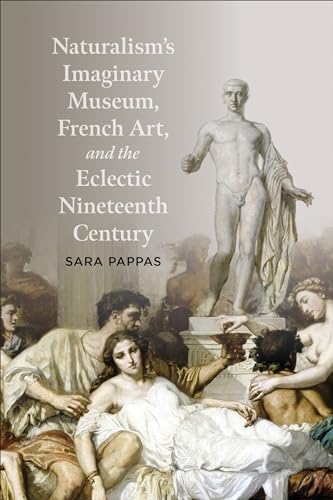
Naturalism's Imaginary Museum, French Art, and the Eclectic Nineteenth Century
Summary
Naturalism's Imaginary Museum, French Art, and the Eclectic Nineteenth Century (University of Toronto Press, 2024) examines one of the most revered art historical narratives of Western art: the famous turning point for painting and sculpture usually emblematized by the works of Édouard Manet and then the Impressionists. Instead of the usual revaluation of this turning point, Sara Pappas argues for the importance of the failure to find a cohesive story for the art world in the period itself, a difficulty that carries forward to galleries today. In order to demonstrate the importance of incongruity and disorder, Pappas brings together two worlds that may seem incompatible: nineteenth-century literary writers involved in naturalism and the organization of permanent collections of later nineteenth-century French art in today's museums. Drawing on the art novels and art criticism of these writers, the book provides optimal access to the questions that continue to haunt the categorization and display of nineteenth-century art.
Guest Sara Pappas is Associate Professor of French and Visual Culture at the University of Richmond. In addition to this volume, she has published articles on topics from 19th century art criticism by literary figures such as Baudelaire and Zola to the Expositions universelles to contemporary artist Kehinde Wiley’s influence on French art, as well as co-curating an exhibit of Nineteenth Century French and Russian Art at the Harnett Museum of Art. Dr. Pappas, thank you for being with us today.
Host Gina Stamm is Associate Professor of French at The University of Alabama, with research concentrated on the environmental humanities and speculative literatures of the 20th and 21st centuries, from Surrealism to contemporary science fiction and feminist utopias, in Metropolitan France and the francophone Caribbean, with a book manuscript under
review on posthumanist ecological engagement in the surrealist movement.


Comments