Support Kritika | Support H-Net | Buy Books Here | Join the NBN and NBN en Español on Patreon | Visit New Books Network en Español!
- African Studies
- African American Studies
- American Politics
- American Studies
- American South
- American West
- Asian American Studies
- Asian Politics
- Australian and New Zealand Studies
- British Studies
- Canadian Studies
- Caribbean Studies
- Central Asian Studies
- Chinese Studies
- East Asian Studies
- Eastern European Studies
- European Politics
- French Studies
- German Studies
- Iberian Studies
- India Studies
- Indian Ocean World
- Indigenous Studies
- Iranian Studies
- Irish Studies
- Israel Studies
- Italian Studies
- Japanese Studies
- Korean Studies
- Latino Studies
- Latin American Studies
- Mexican Studies
- Middle Eastern Studies
- Pacific Studies
- Polish Studies
- Russian and Eurasian Studies
- Southeast Asian Studies
- South Asian Studies
- Taiwan Studies
- Turkish Studies
- Ukrainian Studies
- Western European Studies
- World Affairs
- Animal Studies
- Anthropology
- Archaeology
- Business, Management, and Marketing
- Media and Communications
- Critical Theory
- Disability Studies
- Drugs, Addiction and Recovery
- Education
- Economics
- Finance
- Geography
- Gender Studies
- Genocide Studies
- Higher Education
- Human Rights
- Journalism
- Language and Translation
- Law
- LGBTQ+ Studies
- National Security
- Philanthropy
- Philosophy
- Policing, Incarceration, and Reform
- Political Science
- Politics & Polemics
- Postcolonial Studies
- Public Policy
- Sex, Sexuality, and Sex Work
- Sociology
- Sound Studies
- Sports
- Urban Studies
- Big Ideas
- Celebration Studies
- Co-Authored
- Cover Story
- Historical Materialism
- History Ex Silo
- Interpretive Political and Social Science
- Invested Investor
- Landscape Architecture
- Mormonism
- NBN Seminar
- New Books with Miranda Melcher
- On the Cusp: Between Strategy and Ethics
- Postscript: Conversations on Politics and Political Science
- Practical History
- Preparing for Life After Grad School
- Psychology and Climate Change
- Syriac Studies
- The Chair: In The Room at the Fed
- Oceanic Studies







































Mar 27, 2023
Safety As We Watch
Anaesthesia in Ireland 1847-1998
Summary
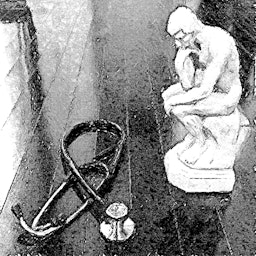
The discovery of anaesthesia which could be administered safely to eliminate the pain of surgery and other medical and dental procedures is widely considered to be one of the greatest developments of the nineteenth century. Yet, until now few studies have focused on anaesthesia in Ireland.
Safety As We Watch: Anaesthesia in Ireland 1847-1998 (Wordwell Books, 2022), written by three Irish anaesthetists, is the first published study of the history of anaesthesia in Ireland. Featuring fascinating vignettes of the personalities and innovators who led the development of anaesthesia in the nineteenth and twentieth centuries, the book leads readers through the history of the practice over 150 years, sketching global networks of exchange between medical practitioners and researchers. Beginning with the administration of the first general anaesthetic in Ireland on 1 January 1847, when ether was given to an 18-year-old girl undergoing an amputation under the care of Dr John MacDonnell, the book traces the debates and issues surrounding the uses and administration of anaesthesia through to the foundation of the College of Anaesthetists of Ireland in 1998. Safety as We Watch is divided into two parts: Part I focuses on the development of chloroform and ether, the mechanisms used to administer the drugs, as well as the innovators and medical professionals responsible, and Part II focuses on the organizations and academic developments in anaesthesia practice and education.
In its examination of this often-overlooked area in the history of Irish medicine Safety as We Watch offers new insight into medical organizations, as well as cultural conceptions of pain and consciousness, and the ways that anaesthesia transformed doctor-patient relationships. This book will be of great interest to medical professionals, historians of medicine, health humanities scholars and to more general readers interested in anaesthesia.
Bridget English is a scholar of Irish literature and culture, modernism, and health humanities, based at the University of Illinois Chicago. She co-convenes the Irish Studies Seminar at the Newberry Library. On Twitter.Related Topics
Your Host
Bridget English
Brigid Wallace is a graduate student at Lehigh University. A historian of the French Atlantic world, my research explores how race, migration, revolution, and science shaped the lives of ordinary people during the Age of Revolutions. Her work traces the movement of people, plants, and ideas across the Atlantic, focusing on mixed-race families who fled Saint-Domingue during the Haitian Revolution and rebuilt their lives in Charleston, South Carolina. Her master's thesis, "Preservation of a Family: The Noisettes' Journey from Saint-Domingue to Charleston, 1794–1860," examines how one family navigated the political upheavals of the French, Haitian, and American Revolutions while preserving kinship networks across shifting racial and national boundaries. Through the story of the Noisette family, I investigate how migration transformed identities and how refugees carried not only memories and traditions but also scientific knowledge. Her work demonstrates that the history of revolution is not only a story of politics and war but also one of families, mobility, and the exchange of knowledge that reshaped the modern Atlantic world.
"You may encounter many obstacles, but you must not be defeated!" Maya Angelou
