Support Kritika | Support H-Net | Buy Books Here | Join the NBN and NBN en Español on Patreon | Visit New Books Network en Español!
- African Studies
- African American Studies
- American Politics
- American Studies
- American South
- American West
- Asian American Studies
- Asian Politics
- Australian and New Zealand Studies
- British Studies
- Canadian Studies
- Caribbean Studies
- Central Asian Studies
- Chinese Studies
- East Asian Studies
- Eastern European Studies
- European Politics
- French Studies
- German Studies
- Iberian Studies
- India Studies
- Indian Ocean World
- Indigenous Studies
- Iranian Studies
- Irish Studies
- Israel Studies
- Italian Studies
- Japanese Studies
- Korean Studies
- Latino Studies
- Latin American Studies
- Mexican Studies
- Middle Eastern Studies
- Pacific Studies
- Polish Studies
- Russian and Eurasian Studies
- Southeast Asian Studies
- South Asian Studies
- Taiwan Studies
- Turkish Studies
- Ukrainian Studies
- Western European Studies
- World Affairs
- Animal Studies
- Anthropology
- Archaeology
- Business, Management, and Marketing
- Media and Communications
- Critical Theory
- Disability Studies
- Drugs, Addiction and Recovery
- Education
- Economics
- Finance
- Geography
- Gender Studies
- Genocide Studies
- Higher Education
- Human Rights
- Journalism
- Language and Translation
- Law
- LGBTQ+ Studies
- National Security
- Philanthropy
- Philosophy
- Policing, Incarceration, and Reform
- Political Science
- Politics & Polemics
- Postcolonial Studies
- Public Policy
- Sex, Sexuality, and Sex Work
- Sociology
- Sound Studies
- Sports
- Urban Studies
- Big Ideas
- Celebration Studies
- Co-Authored
- Cover Story
- Historical Materialism
- History Ex Silo
- Interpretive Political and Social Science
- Invested Investor
- Landscape Architecture
- Mormonism
- NBN Seminar
- New Books with Miranda Melcher
- On the Cusp: Between Strategy and Ethics
- Postscript: Conversations on Politics and Political Science
- Practical History
- Preparing for Life After Grad School
- Psychology and Climate Change
- Syriac Studies
- The Chair: In The Room at the Fed
- Oceanic Studies











































Oct 11, 2025
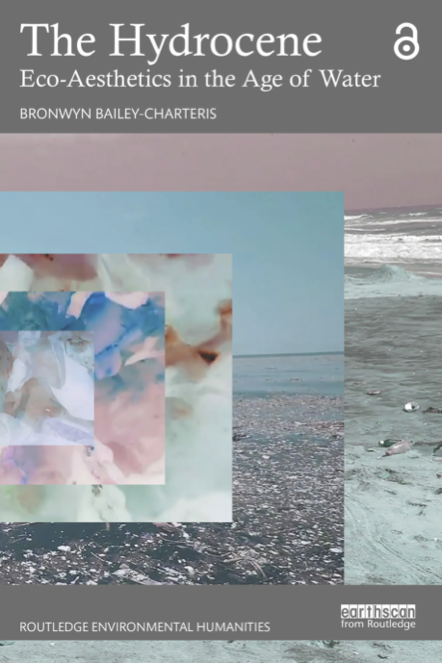
The Hydrocene
Eco-Aesthetics in the Age of Water
Summary
This book challenges conventional notions of the Anthropocene and champions the Hydrocene: the Age of Water. It presents the Hydrocene as a disruptive, conceptual epoch and curatorial theory, emphasising water's pivotal role in the climate crisis and contemporary art.
The Hydrocene is a wet ontological shift in eco-aesthetics which redefines our approach to water, transcending anthropocentric, neo-colonial and environmentally destructive ways of relating to water. As the most fundamental of elements, water has become increasingly politicised, threatened and challenged by the climate crisis. In response, The Hydrocene articulates and embodies the distinctive ways contemporary artists relate and engage with water, offering valuable lessons towards climate action. Through five compelling case studies across swamp, river, ocean, fog and ice, this book binds feminist environmental humanities theories with the practices of eco-visionary artists. Focusing on Nordic and Oceanic water-based artworks, it demonstrates how art can disrupt established human–water dynamics. By engaging hydrofeminist, care-based and planetary thinking, The Hydrocene learns from the knowledge and agency of water itself within the tide of art going into the blue.
The Hydrocene urgently highlights the transformative power of eco-visionary artists in reshaping human–water relations. At the confluence of contemporary art, curatorial theory, climate concerns and environmental humanities, this book is essential reading for researchers, curators, artists, students and those seeking to reconsider their connection with water and advocate for climate justice amid the ongoing natural-cultural water crisis.
Dr Bronwyn Bailey-Charteris thinks with water. She is an Australian and Swedish curator, writer and lecturer based on Darug and Gundungurra Country, Blue Mountains. Her expertise is on the poetics and politics of eco-aesthetics and curatorial theory with a focus on water, environmental art and hydrofeminism. Her work navigates fluid territories through her academic work, curatorial theory and independent curatorial practice, which spans the Nordic and Oceanic contexts. Her work seeks to address the climate crisis through creative practice, theory making and pedagogy. Her work charts new ways of seeing water's currents across aesthetic, cultural, and computational landscapes. Based in the Blue Mountains on Dharug and Gundungurra Ngurra (Country), she is Senior Research Associate at UNSW as part of the ARC Centre of Excellence for Automated Decision-Making and Society (ADM+S). Her research proposing the Hydrocene as a disruptive epoch and curatorial theory is internationally recognised and is the focus of her monograph on art, climate and eco-aesthetics, titled The Hydrocene: Eco-Aesthetics in the Age of Water (Routledge, Environmental Humanities Series 2024).
Gargi Binju is a PhD scholar at the University of Tuebingen.


Comments