Support Kritika | Support H-Net | Buy Books Here | Join the NBN and NBN en Español on Patreon | Visit New Books Network en Español!
- African Studies
- African American Studies
- American Politics
- American Studies
- American South
- American West
- Asian American Studies
- Asian Politics
- Australian and New Zealand Studies
- British Studies
- Canadian Studies
- Caribbean Studies
- Central Asian Studies
- Chinese Studies
- East Asian Studies
- Eastern European Studies
- European Politics
- French Studies
- German Studies
- Iberian Studies
- India Studies
- Indian Ocean World
- Indigenous Studies
- Iranian Studies
- Irish Studies
- Israel Studies
- Italian Studies
- Japanese Studies
- Korean Studies
- Latino Studies
- Latin American Studies
- Mexican Studies
- Middle Eastern Studies
- Pacific Studies
- Polish Studies
- Russian and Eurasian Studies
- Southeast Asian Studies
- South Asian Studies
- Taiwan Studies
- Turkish Studies
- Ukrainian Studies
- Western European Studies
- World Affairs
- Animal Studies
- Anthropology
- Archaeology
- Business, Management, and Marketing
- Media and Communications
- Critical Theory
- Disability Studies
- Drugs, Addiction and Recovery
- Education
- Economics
- Finance
- Geography
- Gender Studies
- Genocide Studies
- Higher Education
- Human Rights
- Journalism
- Language and Translation
- Law
- LGBTQ+ Studies
- National Security
- Philanthropy
- Philosophy
- Policing, Incarceration, and Reform
- Political Science
- Politics & Polemics
- Postcolonial Studies
- Public Policy
- Sex, Sexuality, and Sex Work
- Sociology
- Sound Studies
- Sports
- Urban Studies
- Big Ideas
- Celebration Studies
- Co-Authored
- Cover Story
- Historical Materialism
- History Ex Silo
- Interpretive Political and Social Science
- Invested Investor
- Landscape Architecture
- Mormonism
- NBN Seminar
- New Books with Miranda Melcher
- On the Cusp: Between Strategy and Ethics
- Postscript: Conversations on Politics and Political Science
- Practical History
- Preparing for Life After Grad School
- Psychology and Climate Change
- Syriac Studies
- The Chair: In The Room at the Fed
- Oceanic Studies





































Aug 13, 2026
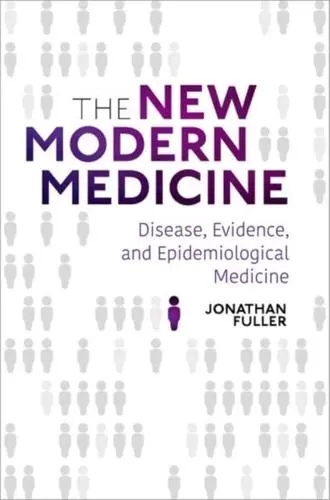
The New Modern Medicine
Disease, Evidence, and Epidemiological Medicine
Summary
Jonathan Fuller’s The New Modern Medicine: Disease, Evidence, and Epidemiological Medicine (Oxford UP, 2025) takes the reader on a philosophical tour through scientific medicine, visiting its distinctive problems, particularly problems brought about by the twentieth century fusion of medicine with epidemiology. Drawing on the author’s training in philosophy of medicine, history and philosophy of science, and clinical medicine, the book examines the contours of the ‘epidemiological medicine’ that resulted from this fusion. It dissects several philosophical problems of the new modern medicine while exploring topics such as theories of contagion and cancer, concepts and theories of disease etiology, the nature of chronic diseases and mental disorders, concepts of medical risk, models of medical evidence and medical prediction, the problems of extrapolating from clinical research, therapeutic skepticism, and the future of modern medicine. Expansive, detailed, rigorous, insightful, and refreshingly penetrable, The New Modern Medicine is an ambitious contribution to the philosophy of medicine and to our understanding of scientific medicine. It is available online open access.
This episode is hosted by Alex Broadbent, Professor of Philosophy of Science at Durham University and Visiting Professor at the University of Johannesburg. He is Director of the Durham-Johannesburg Centre for Philosophy of Epidemiology, Medicine, and Public Health, and co-leads the Measurement Lab in the Institute for Medical Humanities.
Your Host
Alex Broadbent
Alex Broadbent is Professor of Philosophy of Science at Durham University and Visiting Professor at the University of Johannesburg. He is Director of the Durham-Johannesburg Centre for Philosophy of Epidemiology, Medicine, and Public Health, and co-leads the Measurement Lab in the Institute for Medical Humanities. Besides his academic research in these areas, he publishes opinion pieces on the interface between science, humanities, and policy, and engages with policy and litigation in relation to epidemiology and public health. He is founding Editor in Chief of the journal Philosophy of Medicine, an Associate Editor of Global Epidemiology, and an Associate Member of Millennium Chambers of The Barrister Network, London.

Comments