Support Kritika | Support H-Net | Buy Books Here | Join the NBN and NBN en Español on Patreon | Visit New Books Network en Español!
- African Studies
- African American Studies
- American Politics
- American Studies
- American South
- American West
- Asian American Studies
- Asian Politics
- Australian and New Zealand Studies
- British Studies
- Canadian Studies
- Caribbean Studies
- Central Asian Studies
- Chinese Studies
- East Asian Studies
- Eastern European Studies
- European Politics
- French Studies
- German Studies
- Iberian Studies
- India Studies
- Indian Ocean World
- Indigenous Studies
- Iranian Studies
- Irish Studies
- Israel Studies
- Italian Studies
- Japanese Studies
- Korean Studies
- Latino Studies
- Latin American Studies
- Mexican Studies
- Middle Eastern Studies
- Pacific Studies
- Polish Studies
- Russian and Eurasian Studies
- Southeast Asian Studies
- South Asian Studies
- Taiwan Studies
- Turkish Studies
- Ukrainian Studies
- Western European Studies
- World Affairs
- Animal Studies
- Anthropology
- Archaeology
- Business, Management, and Marketing
- Media and Communications
- Critical Theory
- Disability Studies
- Drugs, Addiction and Recovery
- Education
- Economics
- Finance
- Geography
- Gender Studies
- Genocide Studies
- Higher Education
- Human Rights
- Journalism
- Language and Translation
- Law
- LGBTQ+ Studies
- National Security
- Philanthropy
- Philosophy
- Policing, Incarceration, and Reform
- Political Science
- Politics & Polemics
- Postcolonial Studies
- Public Policy
- Sex, Sexuality, and Sex Work
- Sociology
- Sound Studies
- Sports
- Urban Studies
- Big Ideas
- Celebration Studies
- Co-Authored
- Cover Story
- Historical Materialism
- History Ex Silo
- Interpretive Political and Social Science
- Invested Investor
- Landscape Architecture
- Mormonism
- NBN Seminar
- New Books with Miranda Melcher
- On the Cusp: Between Strategy and Ethics
- Postscript: Conversations on Politics and Political Science
- Practical History
- Preparing for Life After Grad School
- Psychology and Climate Change
- Syriac Studies
- The Chair: In The Room at the Fed
- Oceanic Studies












































May 21, 2026
10.5 The Novel as Instrument: Sinan Antoon and Michael Allan (MAT)
Summary
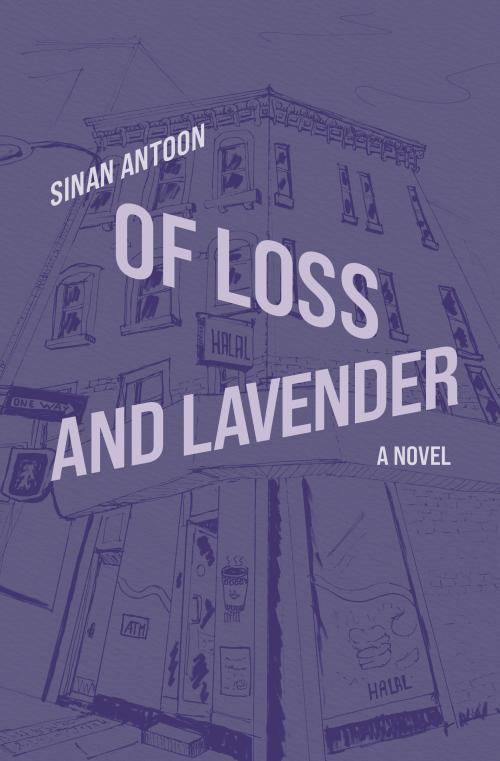
“I am haunted by history: the history of dictatorship, the history of empire, history as a whole,” declares the Iraqi novelist, poet, scholar, and literary translator Sinan Antoon near the start of this conversation about his most recent novel, Of Loss and Lavender. Sinan, speaking with Magalí and critic Michael Allan, goes on to say that “the novel allows for a more wholesome, in-depth confrontation with history.” That confrontation, in turn, requires narrative forms that are complex, sometimes fractured, and often non-linear in order to braid together a range of different perspectives on a particular moment or event.
As Sinan observes in a discussion of the Arabic term nisyān—“forgetting” or “forgetfulness,” although its nuances in Arabic are not easily rendered in English—even memory itself is not static. And yet, shared histories of empire and imperialism make it possible to draw connections between far-flung locations, as Sinan does in Of Loss and Lavender by drawing together Iraq and Puerto Rico. From here, the conversation turns to the pleasures and challenges of translation, including some of Sinan’s choices when translating his own work into English. This includes the effort to make legible the nuances of race, class, and other forms of difference across contexts; although, as Sinan notes, much of his younger readership in the Arab world today is often well-versed in US culture. The conversation concludes with a discussion of Sinan’s frequent use of poems and songs in the novel, a device that points back to the multi-genre experiments of the premodern Arabic tradition, and a moving portrait of a teacher who transmitted to his students ideas about justice and equality despite the dictatorship under which he worked.
Mentioned in this episode:
- About Baghdad
- The Baghdad Eucharist
- Mahmoud Darwish, In the Presence of Absence
- Darwish’s “Memory for Forgetfulness” (on nisyān)
- The Book of Collateral Damage
- Elias Khoury and the use of dialect in contemporary Arabic fiction
- Quebecois literature
- Breaking Bad
- Um Kulthoum
Related Topics
Your Host
Novel Dialogue
Find out more about Novel Dialogue and its hosts and organizers here. Contact us, get that exact quote from a transcript, and explore many more conversations between novelists and critics.


Comments