Support Kritika | Support H-Net | Buy Books Here | Join the NBN and NBN en Español on Patreon | Visit New Books Network en Español!
- African Studies
- African American Studies
- American Politics
- American Studies
- American South
- American West
- Asian American Studies
- Asian Politics
- Australian and New Zealand Studies
- British Studies
- Canadian Studies
- Caribbean Studies
- Central Asian Studies
- Chinese Studies
- East Asian Studies
- Eastern European Studies
- European Politics
- French Studies
- German Studies
- Iberian Studies
- India Studies
- Indian Ocean World
- Indigenous Studies
- Iranian Studies
- Irish Studies
- Israel Studies
- Italian Studies
- Japanese Studies
- Korean Studies
- Latino Studies
- Latin American Studies
- Mexican Studies
- Middle Eastern Studies
- Pacific Studies
- Polish Studies
- Russian and Eurasian Studies
- Southeast Asian Studies
- South Asian Studies
- Taiwan Studies
- Turkish Studies
- Ukrainian Studies
- Western European Studies
- World Affairs
- Animal Studies
- Anthropology
- Archaeology
- Business, Management, and Marketing
- Media and Communications
- Critical Theory
- Disability Studies
- Drugs, Addiction and Recovery
- Education
- Economics
- Finance
- Geography
- Gender Studies
- Genocide Studies
- Higher Education
- Human Rights
- Journalism
- Language and Translation
- Law
- LGBTQ+ Studies
- National Security
- Philanthropy
- Philosophy
- Policing, Incarceration, and Reform
- Political Science
- Politics & Polemics
- Postcolonial Studies
- Public Policy
- Sex, Sexuality, and Sex Work
- Sociology
- Sound Studies
- Sports
- Urban Studies
- Big Ideas
- Celebration Studies
- Co-Authored
- Cover Story
- Historical Materialism
- History Ex Silo
- Interpretive Political and Social Science
- Invested Investor
- Landscape Architecture
- Mormonism
- NBN Seminar
- New Books with Miranda Melcher
- On the Cusp: Between Strategy and Ethics
- Postscript: Conversations on Politics and Political Science
- Practical History
- Preparing for Life After Grad School
- Psychology and Climate Change
- Syriac Studies
- The Chair: In The Room at the Fed
- Oceanic Studies














































Mar 24, 2026
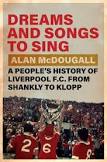
Dreams and Songs to Sing
A People's History of Liverpool FC from Shankly to Klopp
Summary
Today we are joined by Alan McDougall, Professor of History at the University of Guelph, and the author of Dreams and Songs To Sing: A People’s History of Liverpool F.C. From Shankly to Klopp (Cambridge: Cambridge University Press, 2025). In our conversation, we discussed the rise of Liverpool as a global football club, the crises that beset the club during the Heysel and Hillsborough disasters, and the necessity of inherent optimism of fandom in contemporary sports.
In Dreams and Songs to Sing, McDougall writes the history of Liverpool FC from Shankly to Klopp in a register that will appeal to both popular and scholarly readers. McDougall is a lifelong Liverpool supporter, and he is careful to point out where his connections to the club and its fandom might shade his examination, but he also shows how those same affective connections allow him to a unique entry point into issues only visible to fans and that supports can be even more critical than a detached observer. This is especially true in his investigation of Heysel and Hillsborough.
The book proceeds roughly chronologically. The book’s early chapters examine the club’s connection to Liverpool’s working-class district 4 and to their Anfield home ground. He pays special attention to the supporter’s end - the notorious Kop. Using oral history interviews, McDougall illustrates the exceptional pull of the stadium to both local and global fans.
The heart of the book is its engaging, thick description of the club’s history during the Shankly era. McDougall shows that not only was Shankly a very successful manager, and quite funny, but that he ran the club with a sense of Liverpool’s local identity. A man who arrived at the right time – he benefitted from Liverpool’s growing global reputation; Beatlemania gave the city a sound but players and fans rubbed shoulders with comics, musicians, and poets.
Shankly embodied the very local socialist, working-class attitudes of the majority of club supporters. His retirement shook the whole city. McDougall uses a family repository of letters to show how people from around the city, the country, and the world wrote to him to express sadness at him leaving and to wish him luck.
McDougall’s account might be from an insider, but his analysis does not shy away from shining a light on the difficult social politics that accompanied the club’s enormous success on the field. European Cup victories sit alongside the deadly hooligan violence at Heysel. Black players like Howard Gayle and John Barnes face racism from the club’s supporters. The club first ignores and then undervalues the rise of women’s football.
McDougall’s history ends in the Klopp era – perhaps a mercy to Liverpool fans! He shows how the contemporary club embodies the idea of a global club with a local heart. The international ownership of the club has successfully navigated the rise of the Premier League and the increasing commercialization of European football, but local supporters have been innovative at creating a culture of resistance to changes that could undermine the glocal identity of Liverpool. Klopp symbolized this new football club: cosmopolitan, emotional, forward, successful.
Compelling and hard to put down, McDougall’s Dreams and Songs to Sing will appeal to all readers of sports history. It will be of particular interest to Liverpool supporters and football fanatics.
Your Host
Keith Rathbone
Keith Rathbone is a Senior Lecturer at Macquarie University in Sydney, Australia. He researches twentieth-century French social and cultural history.


