Support Kritika | Support H-Net | Buy Books Here | Join the NBN and NBN en Español on Patreon | Visit New Books Network en Español!
- African Studies
- African American Studies
- American Politics
- American Studies
- American South
- American West
- Asian American Studies
- Asian Politics
- Australian and New Zealand Studies
- British Studies
- Canadian Studies
- Caribbean Studies
- Central Asian Studies
- Chinese Studies
- East Asian Studies
- Eastern European Studies
- European Politics
- French Studies
- German Studies
- Iberian Studies
- India Studies
- Indian Ocean World
- Indigenous Studies
- Iranian Studies
- Irish Studies
- Israel Studies
- Italian Studies
- Japanese Studies
- Korean Studies
- Latino Studies
- Latin American Studies
- Mexican Studies
- Middle Eastern Studies
- Pacific Studies
- Polish Studies
- Russian and Eurasian Studies
- Southeast Asian Studies
- South Asian Studies
- Taiwan Studies
- Turkish Studies
- Ukrainian Studies
- Western European Studies
- World Affairs
- Animal Studies
- Anthropology
- Archaeology
- Business, Management, and Marketing
- Media and Communications
- Critical Theory
- Disability Studies
- Drugs, Addiction and Recovery
- Education
- Economics
- Finance
- Geography
- Gender Studies
- Genocide Studies
- Higher Education
- Human Rights
- Journalism
- Language and Translation
- Law
- LGBTQ+ Studies
- National Security
- Philanthropy
- Philosophy
- Policing, Incarceration, and Reform
- Political Science
- Politics & Polemics
- Postcolonial Studies
- Public Policy
- Sex, Sexuality, and Sex Work
- Sociology
- Sound Studies
- Sports
- Urban Studies
- Big Ideas
- Celebration Studies
- Co-Authored
- Cover Story
- Historical Materialism
- History Ex Silo
- Interpretive Political and Social Science
- Invested Investor
- Landscape Architecture
- Mormonism
- NBN Seminar
- New Books with Miranda Melcher
- On the Cusp: Between Strategy and Ethics
- Postscript: Conversations on Politics and Political Science
- Practical History
- Preparing for Life After Grad School
- Psychology and Climate Change
- Syriac Studies
- The Chair: In The Room at the Fed
- Oceanic Studies








































Aug 9, 2026
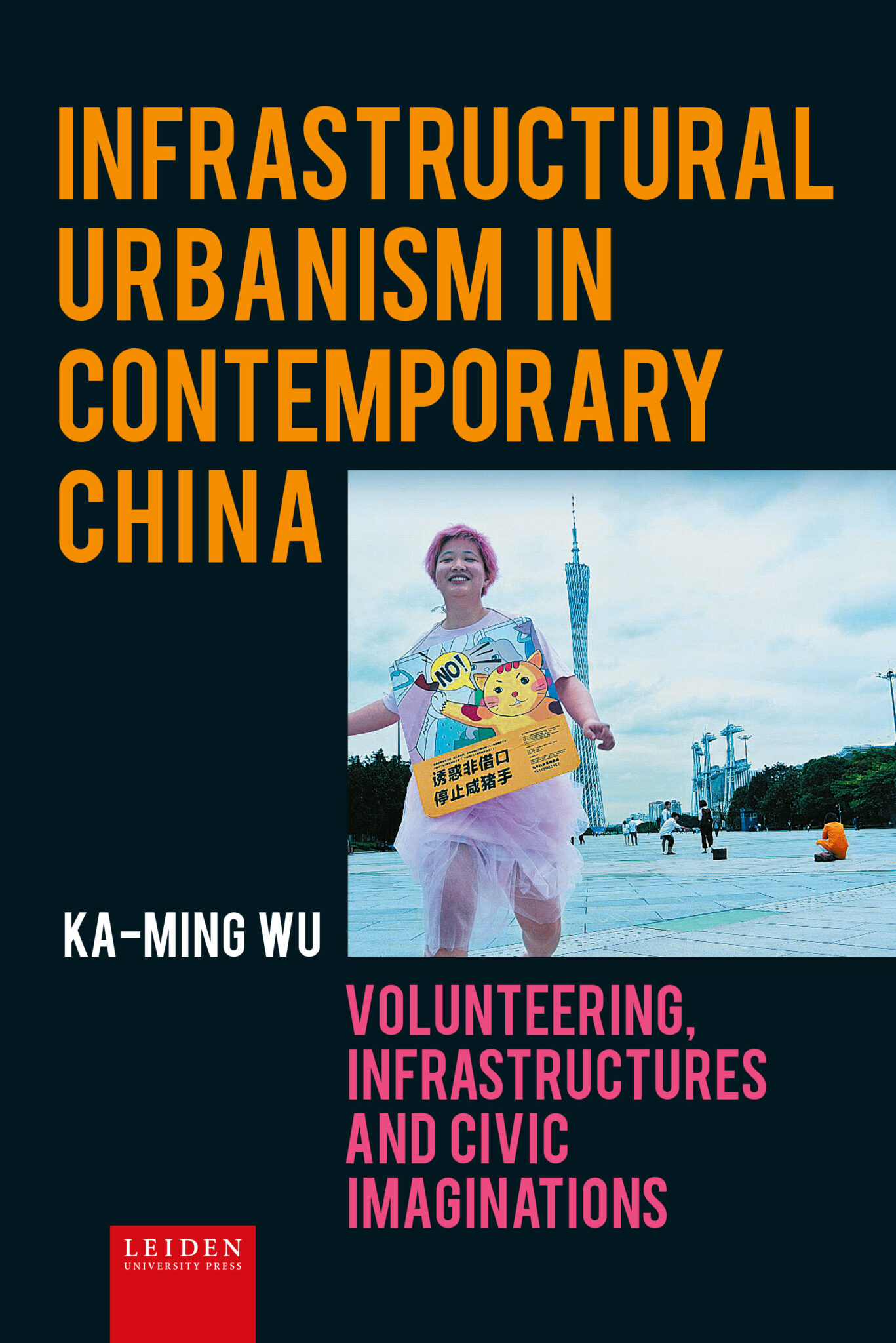
Infrastructural Urbanism in Contemporary China
Volunteering, Infrastructures and Civic Imaginations
Summary
Infrastructural Urbanism in Contemporary China: Volunteering, Infrastructures and Civic Imaginations (Leiden University Press, 2026) examines how Chinese citizens negotiate their everyday experiences with urban spaces, improved city infrastructure, and an increasingly tight surveillance regime through volunteering. This book asks how citizens connect to city spaces where facilities for transit, culture, and leisure have been substantially upgraded. Drawing on extensive research, Ka-ming Wu investigates how citizens conduct volunteer activities that not only promote party-state campaigns and engage with new urban spaces and services, but also experiment with political, social, and cultural rights, including advocating for the rights of people with disabilities and promoting unofficial interpretations of national history.
The book argues that volunteering has become an urban practice through which citizens navigate existing hierarchies of urban and rural status, gender, age, and ability, while contesting top-down, mega-event-driven urbanization. It situates Chinese everyday urbanism within the context of China's hosting of multiple international events, its expanding public and digital infrastructures, heightened party-state control, and burgeoning digital activism. The book contributes to the infrastructural turn in urban anthropology and the field of China studies, offering a new understanding of urban rights and public access in contemporary China.
NOTE: The book Ka-ming Wu mentioned in the interview is Stephen Graham’s Cities under Siege: The New Military Urbanism (Verso, 2010).
Wu Ka-ming is Associate Professor in the Department of Cultural and Religious Studies at The Chinese University of Hong Kong, with courtesy appointments in the Department of Anthropology and the Centre for China Studies. Trained as a cultural anthropologist, her work is interdisciplinary, situated at the intersection of cultural studies, anthropology, China studies, and environmental humanities. She is the author of Reinventing Chinese Tradition: The Cultural Politics of Late Socialism (UIP 2015) and the co-author of Living with Waste (CUP 2017).
Yadong Li is an anthropologist-in-training. He is a PhD candidate of Socio-cultural Anthropology at Tulane University. More details about his scholarship and research interests can be found here.
Comments