Support Kritika | Support H-Net | Buy Books Here | Join the NBN and NBN en Español on Patreon | Visit New Books Network en Español!
- African Studies
- African American Studies
- American Politics
- American Studies
- American South
- American West
- Asian American Studies
- Asian Politics
- Australian and New Zealand Studies
- British Studies
- Canadian Studies
- Caribbean Studies
- Central Asian Studies
- Chinese Studies
- East Asian Studies
- Eastern European Studies
- European Politics
- French Studies
- German Studies
- Iberian Studies
- India Studies
- Indian Ocean World
- Indigenous Studies
- Iranian Studies
- Irish Studies
- Israel Studies
- Italian Studies
- Japanese Studies
- Korean Studies
- Latino Studies
- Latin American Studies
- Mexican Studies
- Middle Eastern Studies
- Pacific Studies
- Polish Studies
- Russian and Eurasian Studies
- Southeast Asian Studies
- South Asian Studies
- Taiwan Studies
- Turkish Studies
- Ukrainian Studies
- Western European Studies
- World Affairs
- Animal Studies
- Anthropology
- Archaeology
- Business, Management, and Marketing
- Media and Communications
- Critical Theory
- Disability Studies
- Drugs, Addiction and Recovery
- Education
- Economics
- Finance
- Geography
- Gender Studies
- Genocide Studies
- Higher Education
- Human Rights
- Journalism
- Language and Translation
- Law
- LGBTQ+ Studies
- National Security
- Philanthropy
- Philosophy
- Policing, Incarceration, and Reform
- Political Science
- Politics & Polemics
- Postcolonial Studies
- Public Policy
- Sex, Sexuality, and Sex Work
- Sociology
- Sound Studies
- Sports
- Urban Studies
- Big Ideas
- Celebration Studies
- Co-Authored
- Cover Story
- Historical Materialism
- History Ex Silo
- Interpretive Political and Social Science
- Invested Investor
- Landscape Architecture
- Mormonism
- NBN Seminar
- New Books with Miranda Melcher
- On the Cusp: Between Strategy and Ethics
- Postscript: Conversations on Politics and Political Science
- Practical History
- Preparing for Life After Grad School
- Psychology and Climate Change
- Syriac Studies
- The Chair: In The Room at the Fed
- Oceanic Studies














































Feb 19, 2026
Helen Garner Hacking Away at the Adverbs
A Novel Dialogue crossover conversation
Summary
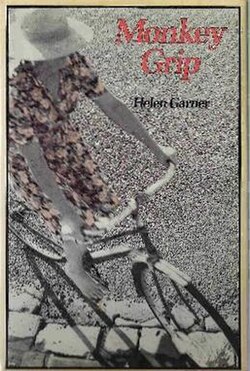
In this RTB and Novel Dialogue episode from 2021, Helen Garner sits down with John and Elizabeth McMahon, a distinguished scholar of Australian literature. Helen’s novels range from the anti-patriarchy exuberance of Monkey Grip (1977) to the heartbreaking mortality at the heart of The Spare Room (2008). She has also authored a slew of nonfiction, plus screenplays for Jane Campion’s Two Friends and Gillian Armstrong’s wonderfully Garneresque The Last Days of Chez Nous. After a reading from John’s favorite, The Children’s Bach, the trio discusses Garner’s capacity for cutting and cutting, creating resonant, thought-inducing gaps. Garner connects that taste for excision, perhaps paradoxically, to her tendency to accumulate scraps, bits and pieces of life. She relates her father’s restlessness to her own life-total of houses inhabited (27). “Why wouldn’t I write about households?” asks Helen, “They’re just so endlessly interesting.”
Who shaped her writing? Raymond Carver: packed with power, but the pages white with omissions and excisions. Helen offers an anecdote about her own pruning that ends with her “ankle-deep in adverbs.” That’s how to escape the “fat writing” that stems for distrust of the reader. She thoughtfully compares the practical virtues of keeping notebooks for the “music” of everyday life to the nightly process of diary-writing (more analytical). John raises the question of pervasive musical metaphors in Helen’s writing, and she reports her passion for “boring pieces” and the “formal” side of Bach, which makes a listener feel that there is such a thing as meaning. “There’s something about shaping a sentence, too, which can be musical.”
Mentioned in the Episode
- Marilynne Robinson, Housekeeping (the fixed people and the wandering people), Gilead, Home,
- The West Wing (yes, the TV show! Helen watched it during lockdown when she couldn’t bear fiction…)
- Raymond Carver‘s minimalist fiction (his first collection)
- Tess Gallagher (as writer and as Carver’s editor)
- Willa Cather, “The Novel Démeublé” (1922; on how to un-furnish fiction, leaving it an empty room)
- Ernest Hemingway, A Moveable Feast
- Sigmund Freud on “the day’s residue” (e.g. in The Interpretation of Dreams, 1900)
- George Eliot, Quarry for Middlemarch
Related Topics
Your Host
Elizabeth Ferry and John Plotz
Free-ranging discussion of books from the past that cast a sideways light on today's world. Recall This Book is hosted by Elizabeth Ferry, Professor of Anthropology at Brandeis University and John Plotz, Barbara Mandel Professor of the Humanities at Brandeis University and co-founder of the Brandeis Educational Justice Initiative.


Comments