Support Kritika | Support H-Net | Buy Books Here | Join the NBN and NBN en Español on Patreon | Visit New Books Network en Español!
- African Studies
- African American Studies
- American Politics
- American Studies
- American South
- American West
- Asian American Studies
- Asian Politics
- Australian and New Zealand Studies
- British Studies
- Canadian Studies
- Caribbean Studies
- Central Asian Studies
- Chinese Studies
- East Asian Studies
- Eastern European Studies
- European Politics
- French Studies
- German Studies
- Iberian Studies
- India Studies
- Indian Ocean World
- Indigenous Studies
- Iranian Studies
- Irish Studies
- Israel Studies
- Italian Studies
- Japanese Studies
- Korean Studies
- Latino Studies
- Latin American Studies
- Mexican Studies
- Middle Eastern Studies
- Pacific Studies
- Polish Studies
- Russian and Eurasian Studies
- Southeast Asian Studies
- South Asian Studies
- Taiwan Studies
- Turkish Studies
- Ukrainian Studies
- Western European Studies
- World Affairs
- Animal Studies
- Anthropology
- Archaeology
- Business, Management, and Marketing
- Media and Communications
- Critical Theory
- Disability Studies
- Drugs, Addiction and Recovery
- Education
- Economics
- Finance
- Geography
- Gender Studies
- Genocide Studies
- Higher Education
- Human Rights
- Journalism
- Language and Translation
- Law
- LGBTQ+ Studies
- National Security
- Philanthropy
- Philosophy
- Policing, Incarceration, and Reform
- Political Science
- Politics & Polemics
- Postcolonial Studies
- Public Policy
- Sex, Sexuality, and Sex Work
- Sociology
- Sound Studies
- Sports
- Urban Studies
- Big Ideas
- Celebration Studies
- Co-Authored
- Cover Story
- Historical Materialism
- History Ex Silo
- Interpretive Political and Social Science
- Invested Investor
- Landscape Architecture
- Mormonism
- NBN Seminar
- New Books with Miranda Melcher
- On the Cusp: Between Strategy and Ethics
- Postscript: Conversations on Politics and Political Science
- Practical History
- Preparing for Life After Grad School
- Psychology and Climate Change
- Syriac Studies
- The Chair: In The Room at the Fed
- Oceanic Studies












































Apr 10, 2026
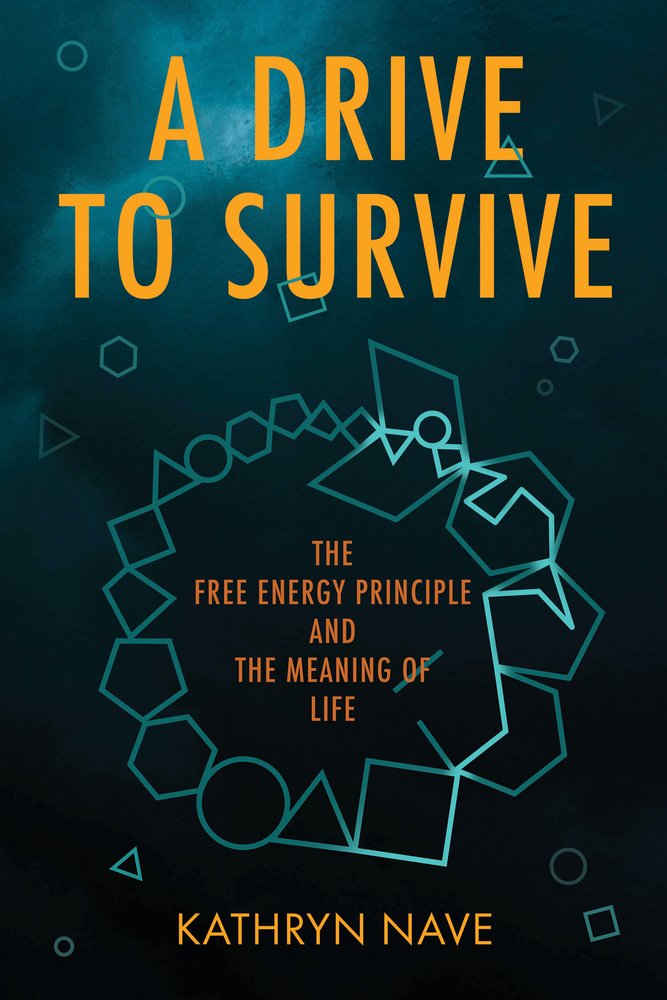
A Drive to Survive
The Free Energy Principle and the Meaning of Life
Summary
The cybernetic tradition in cognitive science analyzes the purposive behavior of many complex systems – from sensory-guided missiles to sensory-guided animals -- in terms of feedback control that maintains stability in the face of external perturbation. A more recent extension and elaboration of this framework brings in predictive processing and the minimization of free energy – essentially, minimizing getting inputs that conflict with what the system expects. In A Drive to Survive: the Free Energy Principle and the Meaning of Life (MIT Press, 2025), Kathryn Nave argues that this framework is inadequate for explaining living organisms, which are not merely complex but inherently unstable and continually producing themselves through metabolism. Nave, who is a Leverhulme Trust Early Career Research Fellow at the University of Edinburgh, defends a bioenactivist view of living organisms in which the chemical and energetic constraints involved in having a metabolism are essential for understanding their actions, in contrast to the “sensor-guided movementism” of the FEP framework.
Related Topics
Your Host
Carrie Figdor
Carrie Figdor is professor of philosophy at the University of Iowa.


Comments