Support Kritika | Support H-Net | Buy Books Here | Join the NBN and NBN en Español on Patreon | Visit New Books Network en Español!
- African Studies
- African American Studies
- American Politics
- American Studies
- American South
- American West
- Asian American Studies
- Asian Politics
- Australian and New Zealand Studies
- British Studies
- Canadian Studies
- Caribbean Studies
- Central Asian Studies
- Chinese Studies
- East Asian Studies
- Eastern European Studies
- European Politics
- French Studies
- German Studies
- Iberian Studies
- India Studies
- Indian Ocean World
- Indigenous Studies
- Iranian Studies
- Irish Studies
- Israel Studies
- Italian Studies
- Japanese Studies
- Korean Studies
- Latino Studies
- Latin American Studies
- Mexican Studies
- Middle Eastern Studies
- Pacific Studies
- Polish Studies
- Russian and Eurasian Studies
- Southeast Asian Studies
- South Asian Studies
- Taiwan Studies
- Turkish Studies
- Ukrainian Studies
- Western European Studies
- World Affairs
- Animal Studies
- Anthropology
- Archaeology
- Business, Management, and Marketing
- Media and Communications
- Critical Theory
- Disability Studies
- Drugs, Addiction and Recovery
- Education
- Economics
- Finance
- Geography
- Gender Studies
- Genocide Studies
- Higher Education
- Human Rights
- Journalism
- Language and Translation
- Law
- LGBTQ+ Studies
- National Security
- Philanthropy
- Philosophy
- Policing, Incarceration, and Reform
- Political Science
- Politics & Polemics
- Postcolonial Studies
- Public Policy
- Sex, Sexuality, and Sex Work
- Sociology
- Sound Studies
- Sports
- Urban Studies
- Big Ideas
- Celebration Studies
- Co-Authored
- Cover Story
- Historical Materialism
- History Ex Silo
- Interpretive Political and Social Science
- Invested Investor
- Landscape Architecture
- Mormonism
- NBN Seminar
- New Books with Miranda Melcher
- On the Cusp: Between Strategy and Ethics
- Postscript: Conversations on Politics and Political Science
- Practical History
- Preparing for Life After Grad School
- Psychology and Climate Change
- Syriac Studies
- The Chair: In The Room at the Fed
- Oceanic Studies














































Aug 27, 2026
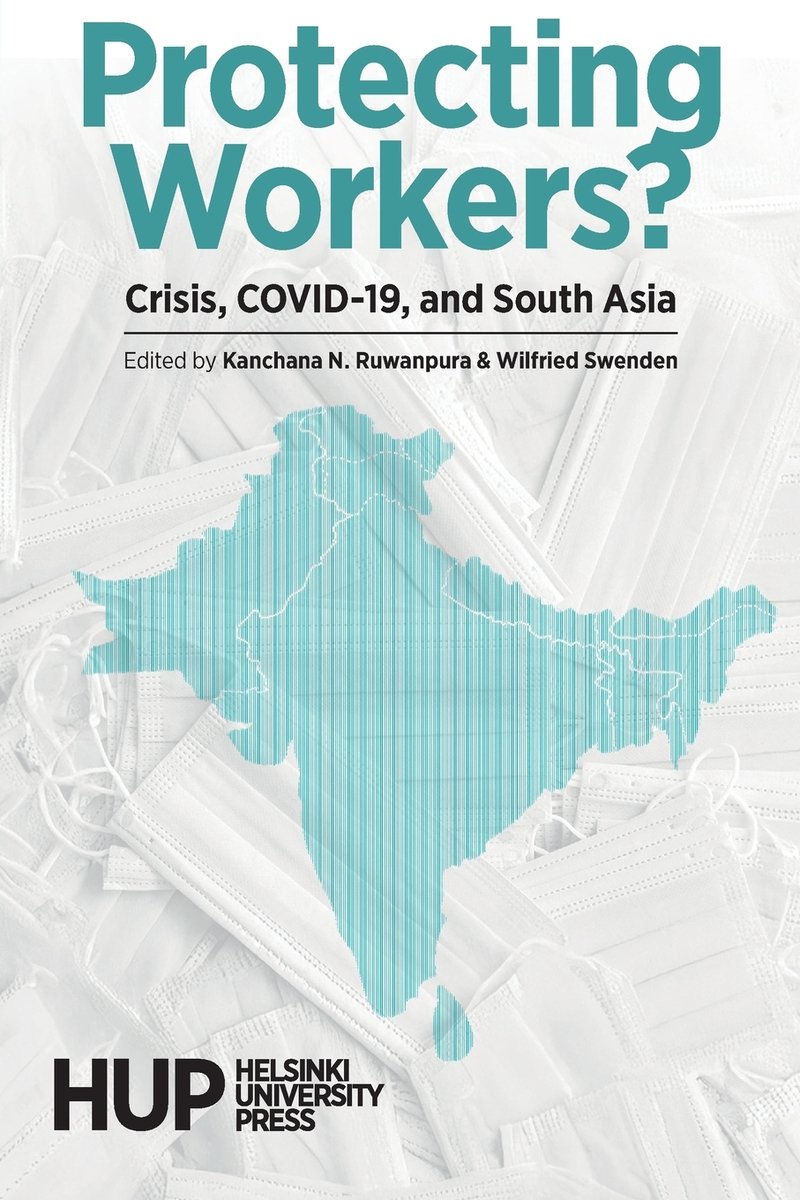
Protecting Workers?
Crisis, COVID-19, and South Asia
Summary
In our recent conversation about Protecting Workers? Crisis, COVID-19 and South Asia (Helsinki UP, 2026), the editors Kanchana N. Ruwanpura and Wilfried Swenden reflect on the need to move beyond treating the pandemic as a singular, isolated shock. Our discussion reflected on the deeper mechanics of knowledge production, how we reflect on crisis beyond its immediate occurrence, how we conceptualize South Asia today, and the process of bringing such a dynamic volume together.
A central theme was the necessity of examining crisis as a revealing, prolonged condition rather than a temporary disruption. The COVID-19 pandemic exposed pre-existing structural vulnerabilities across Bangladesh, India, Nepal, Pakistan, and Sri Lanka. Theorizing through this moment meant examining how state strategies and worker realities collided when formal safety nets faltered, forcing us to rethink South Asia not merely as a fixed geographic region, but as a shared space of cascading socio-economic pressures and labor struggles. While this volume traces state policy and institutional shifts, the core strength of the volume lies in highlighting the resourcefulness and claim-making capacities of workers fighting for justice. Assembling these regional perspectives provides a critical blueprint for rethinking state-society relations, labor rights, and collective action in post-pandemic South Asia.


Comments