Support Kritika | Support H-Net | Buy Books Here | Join the NBN and NBN en Español on Patreon | Visit New Books Network en Español!
- African Studies
- African American Studies
- American Politics
- American Studies
- American South
- American West
- Asian American Studies
- Asian Politics
- Australian and New Zealand Studies
- British Studies
- Canadian Studies
- Caribbean Studies
- Central Asian Studies
- Chinese Studies
- East Asian Studies
- Eastern European Studies
- European Politics
- French Studies
- German Studies
- Iberian Studies
- India Studies
- Indian Ocean World
- Indigenous Studies
- Iranian Studies
- Irish Studies
- Israel Studies
- Italian Studies
- Japanese Studies
- Korean Studies
- Latino Studies
- Latin American Studies
- Mexican Studies
- Middle Eastern Studies
- Pacific Studies
- Polish Studies
- Russian and Eurasian Studies
- Southeast Asian Studies
- South Asian Studies
- Taiwan Studies
- Turkish Studies
- Ukrainian Studies
- Western European Studies
- World Affairs
- Animal Studies
- Anthropology
- Archaeology
- Business, Management, and Marketing
- Media and Communications
- Critical Theory
- Disability Studies
- Drugs, Addiction and Recovery
- Education
- Economics
- Finance
- Geography
- Gender Studies
- Genocide Studies
- Higher Education
- Human Rights
- Journalism
- Language and Translation
- Law
- LGBTQ+ Studies
- National Security
- Philanthropy
- Philosophy
- Policing, Incarceration, and Reform
- Political Science
- Politics & Polemics
- Postcolonial Studies
- Public Policy
- Sex, Sexuality, and Sex Work
- Sociology
- Sound Studies
- Sports
- Urban Studies
- Big Ideas
- Celebration Studies
- Co-Authored
- Cover Story
- Historical Materialism
- History Ex Silo
- Interpretive Political and Social Science
- Invested Investor
- Landscape Architecture
- Mormonism
- NBN Seminar
- New Books with Miranda Melcher
- On the Cusp: Between Strategy and Ethics
- Postscript: Conversations on Politics and Political Science
- Practical History
- Preparing for Life After Grad School
- Psychology and Climate Change
- Syriac Studies
- The Chair: In The Room at the Fed
- Oceanic Studies








































Oct 8, 2026
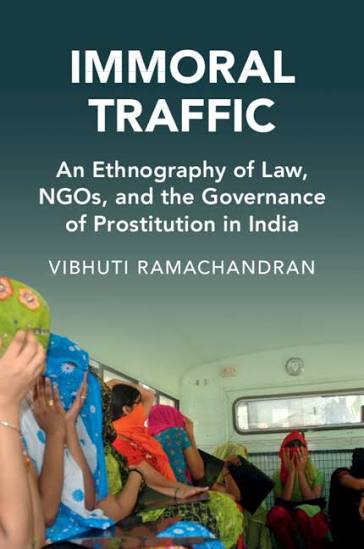
Immoral Traffic An Ethnography of Law, NGOs, and the Governance of Prostitution in India
Summary
Immoral Traffic: An Ethnography of Law, NGOs, and the Governance of Prostitution in India (Cambridge UP, 2025) delves into the complex intersection of India's anti-prostitution law and global anti-trafficking campaigns, and how they impact sex workers in both voluntary and involuntary situations. Immoral Traffic examines the role of legal actors and NGOs in implementing these interventions, revealing the mix of paternalism, humanitarianism, punitive care, bureaucracy, and morality in their efforts. Through a sequence of interventions prescribed by India's anti-prostitution law, the book follows the experiences of sex workers, from rescues to courts to carceral shelters. It sheds light on the ways in which donor-driven NGOs draw upon this law to implement anti-trafficking agendas, and how these interventions are navigated by women removed from the sex trade. Detailed and eye-opening, this book is a valuable resource for scholars and students of anthropology, law and society, gender and sexuality studies, South Asian studies, global studies, and critical studies of NGOs and humanitarianism.
Vibhuti Ramachandran is an anthropologist of law, gender and sexuality, and South Asia. She serves as an Associate Professor at University of California-Irvine's Department of Global and International Studies, School of Social Sciences.
Saumya Dadoo is a PhD Candidate at Columbia University's Department of Middle East, South Asian, and African Studies (MESAAS). Her dissertation focuses on the history of policing and punishment in colonial North India.
Comments